Motivated by the hardships of the pandemic, two Macao young professionals founded Genervision House to promote the UN’s Sustainable Development Goals at home.
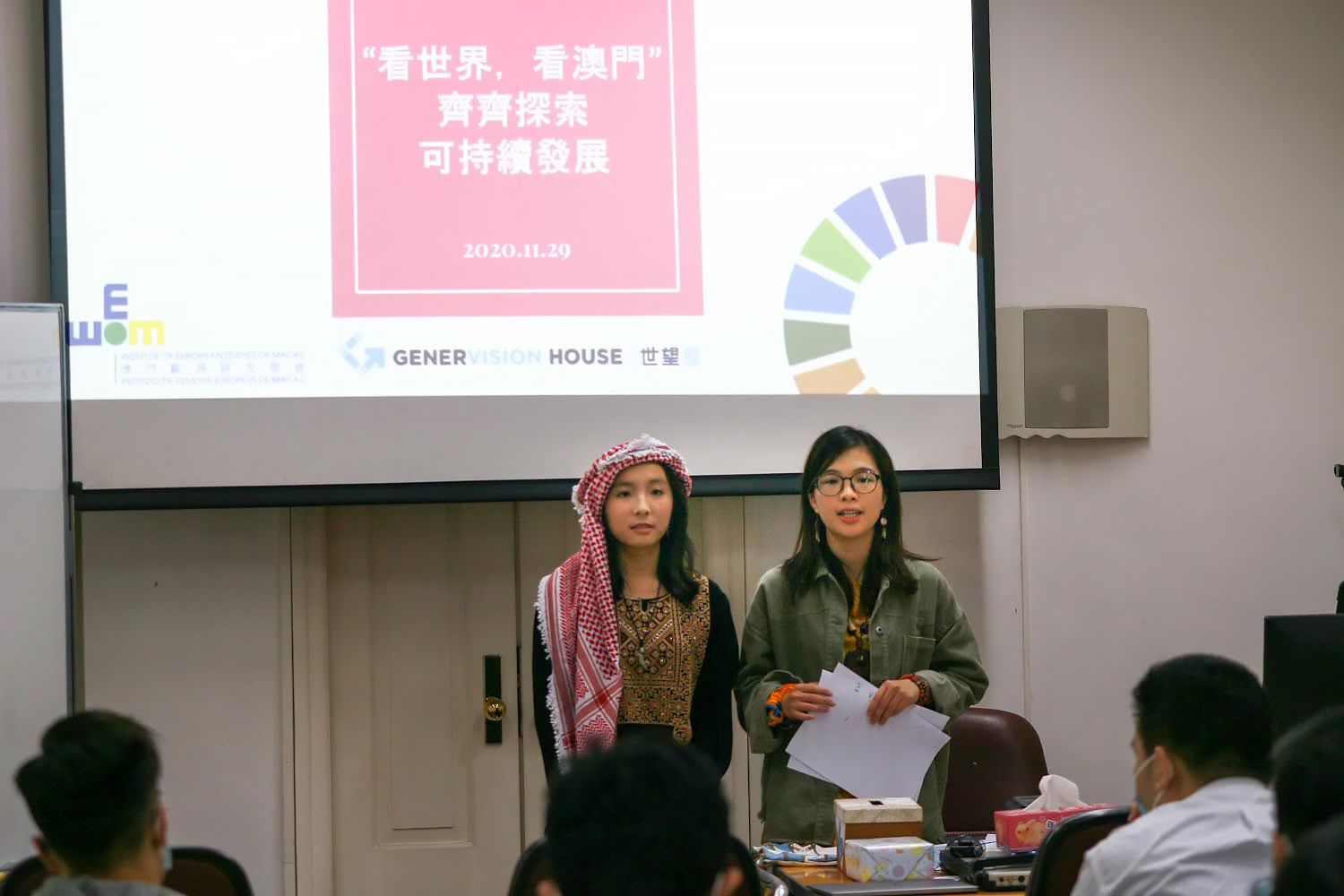
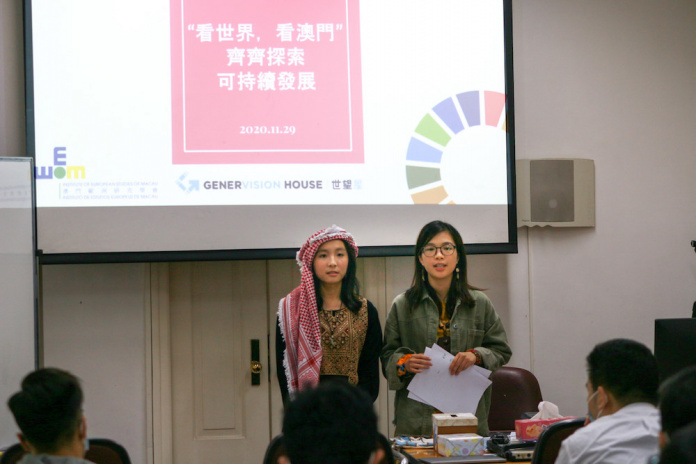
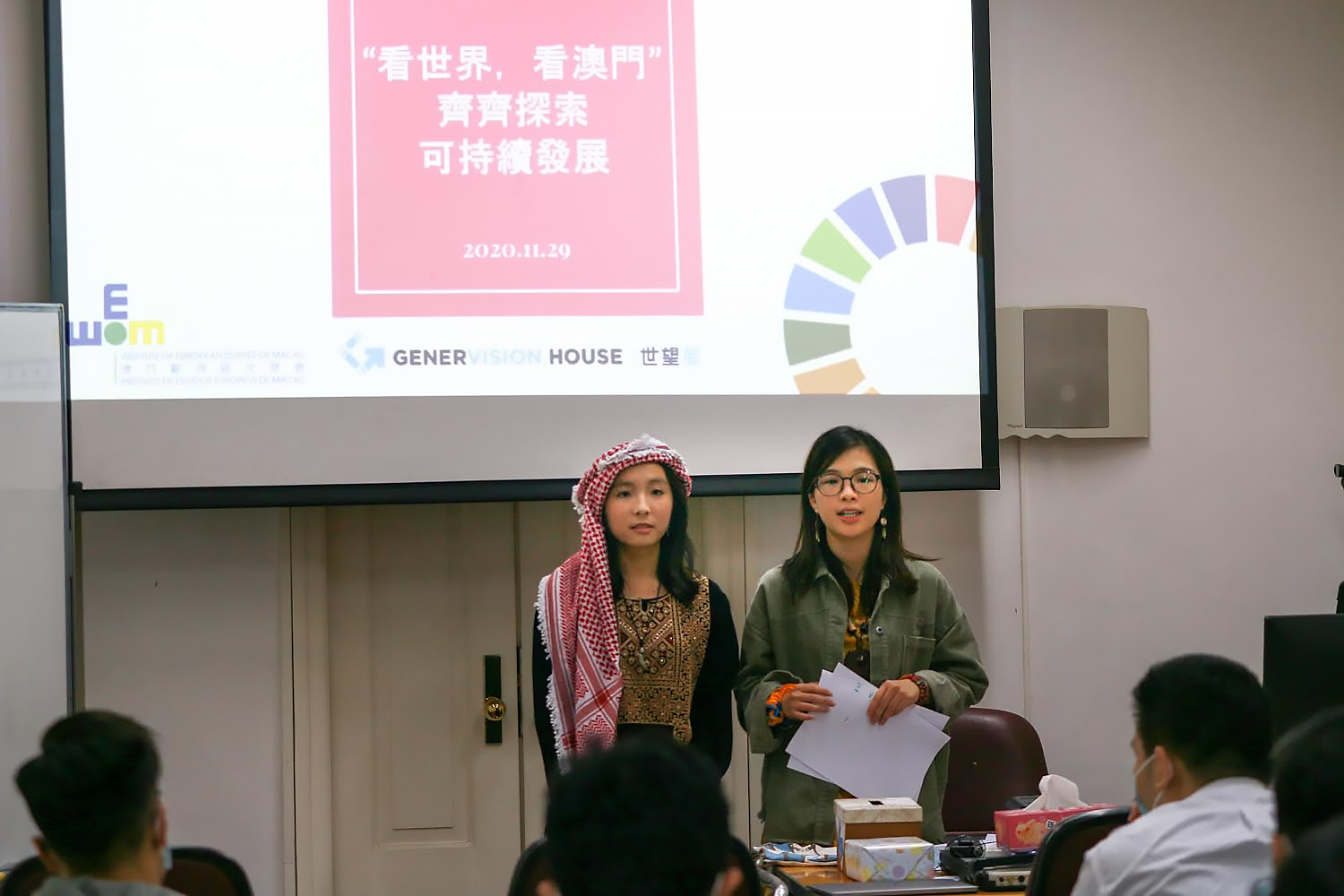
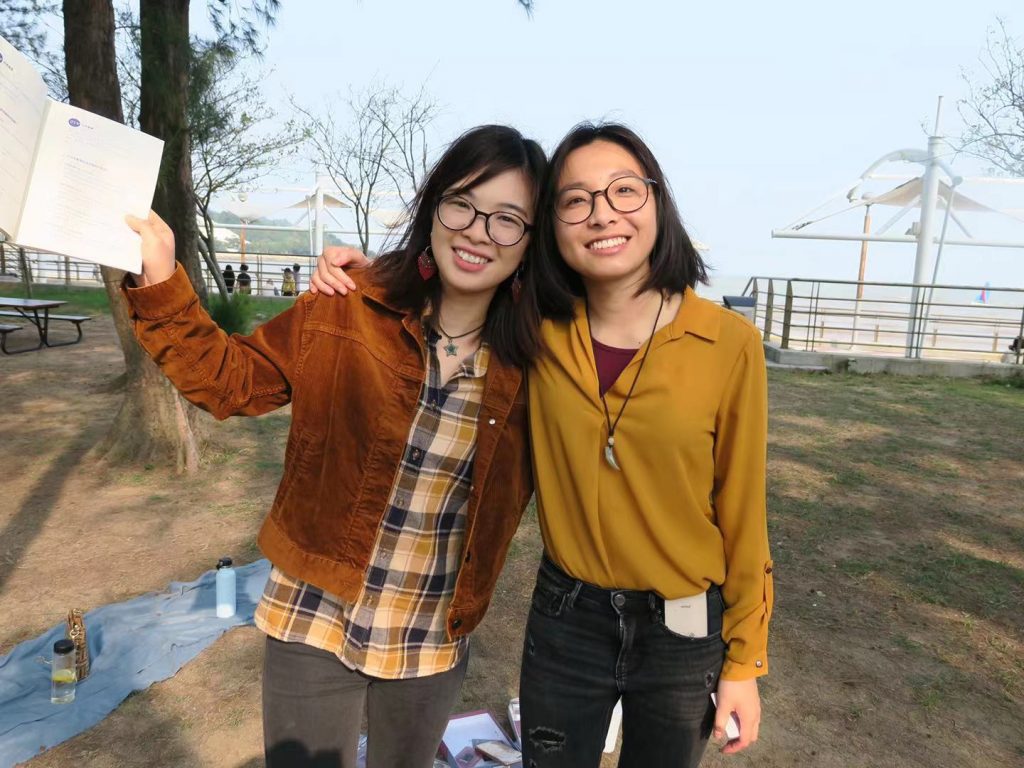
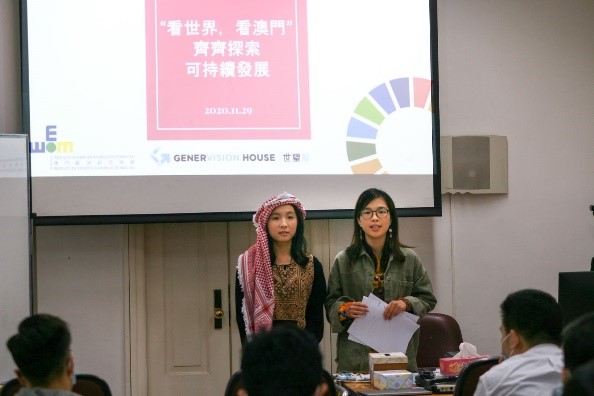
Genervision House founders Christy Un and Arianna U at a UN Sustainable Development Goal workshop at the Institute of European Studies of Macau – All photos courtesy of Genervision House
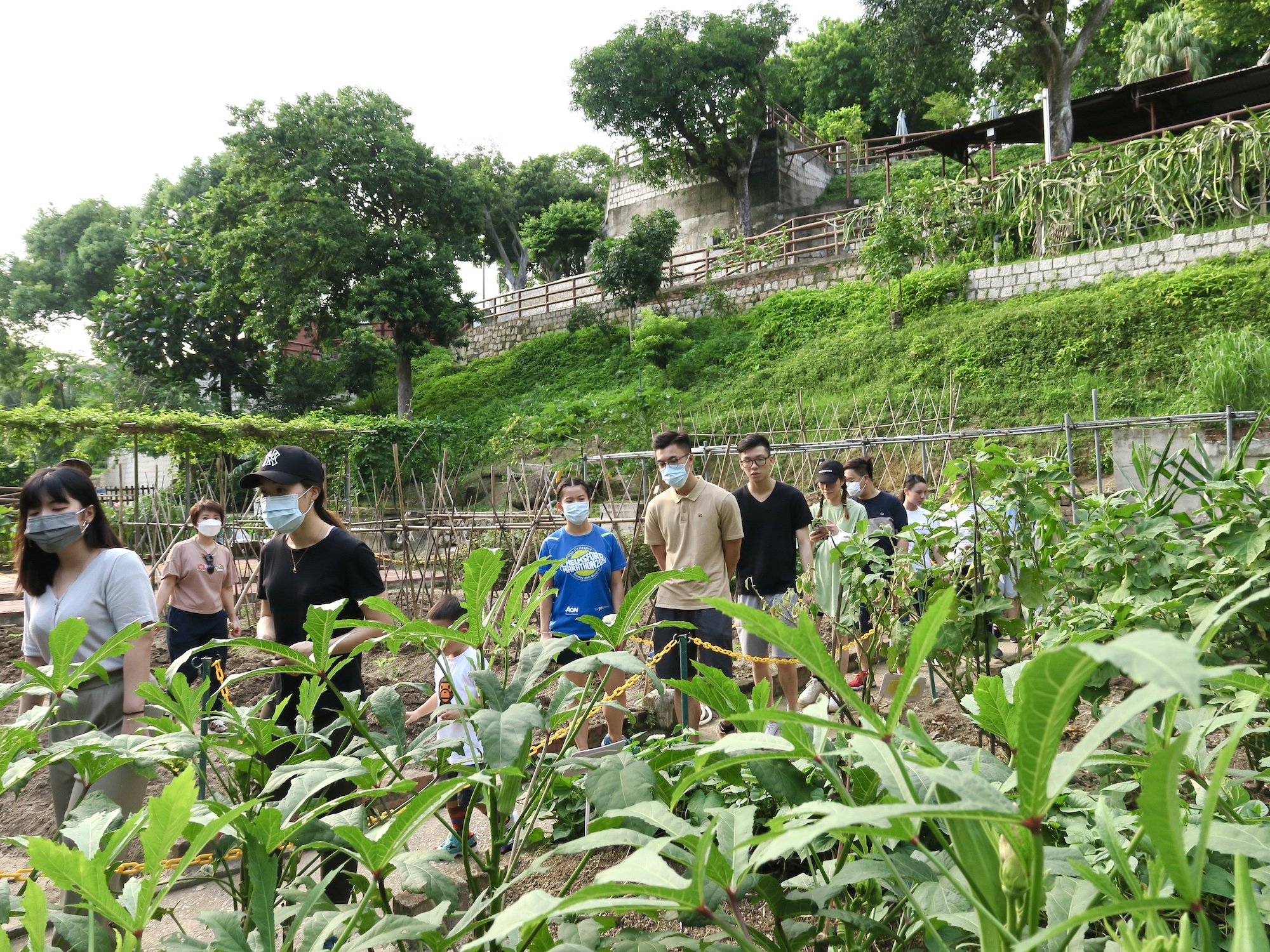
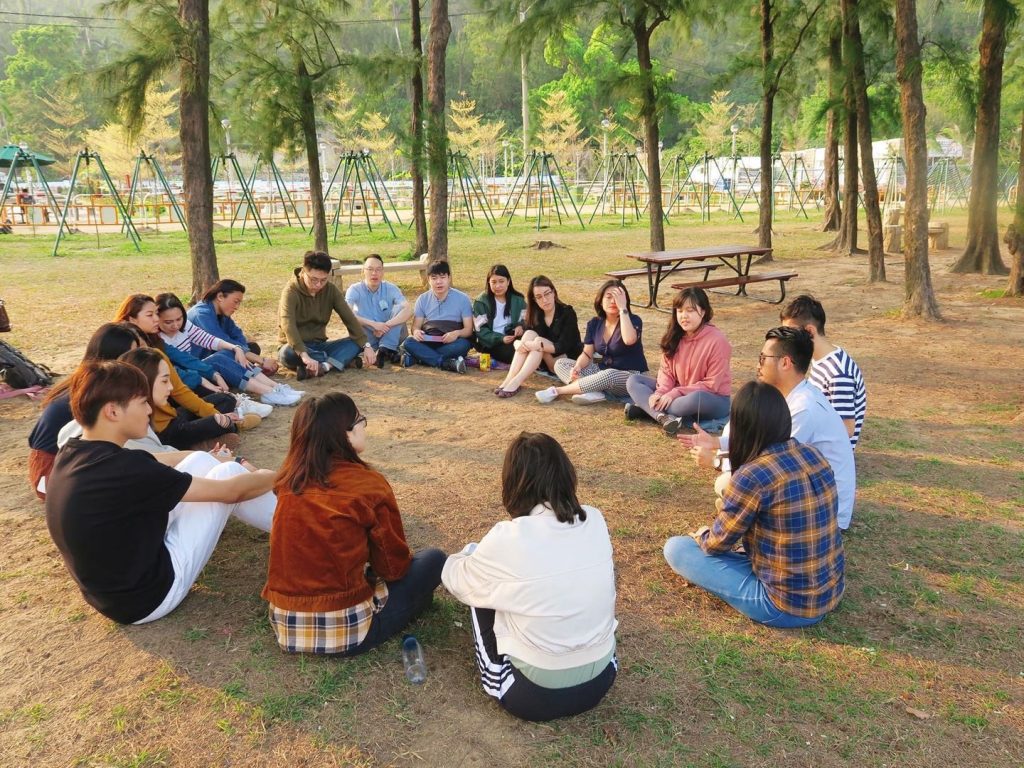
During a day trip to Oscar Farm in Coloane in July, Macao residents toured the grounds, learned how to harvest ingredients, and discussed sustainable food systems and agriculture practices. Organised by Genervision House, a local NGO founded by two young professionals in January 2021, and the Society of Food and Environmental Health, the farming workshop raised awareness about sustainability through hands-on experiences. And that’s exactly what Genervision House is all about: sharing knowledge and promoting sustainable development with its events, educational videos, experiential field trips and cross-sector collaborations.
Genervision House arranged a farm tour in Coloane with the Society of Food and Environmental Health to discuss food waste and sustainability
Though it’s been less than a year, the group’s work has already garnered recognition. In October, the United Nations Sustainable Development Solutions Network Youth (SDSN Youth) programme approved Genervision House to join its international network, marking a first for Macao. With 750 member organisations across 127 countries, the UN programme seeks to empower young people to plan, advocate and work towards achieving the UN’s 17 Sustainable Development Goals (SDGs).
“It feels exciting to be part of [SDSN Youth] because we can do more with international resources and assistance,” says 24-year-old Genervision House co-founder and Macao resident Christy Un, her eyes shining with excitement. “We want to collaborate with different experts worldwide so we could bring in the best practices into Macao, as well as share our stories with a global audience.”
While starting an advocacy and knowledge exchange platform initiative during the Covid-19 pandemic posed challenges, Un and fellow 27-year-old co-founder Arianna U, say the devastation and uncertainty around the globe actually motivated them to act.
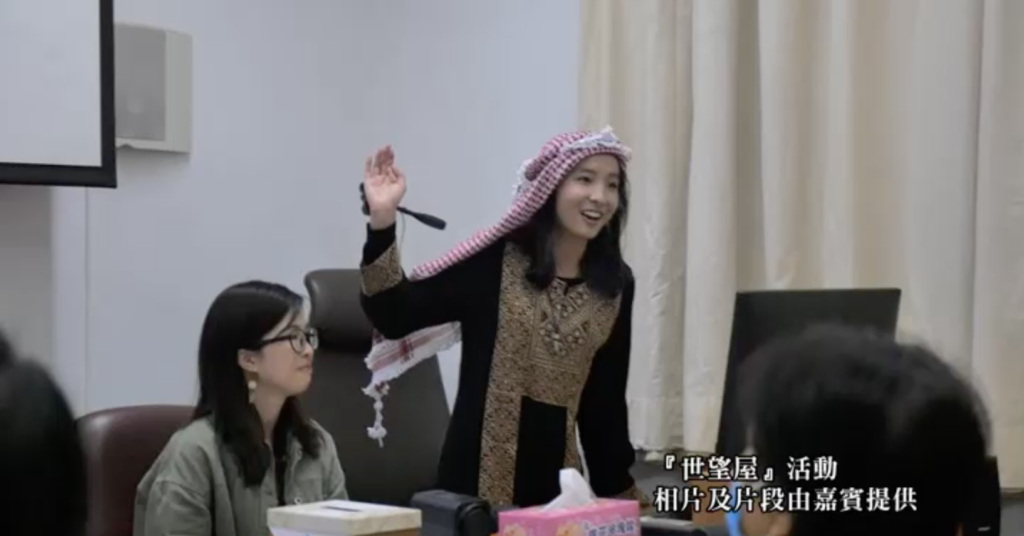
In the years leading up to Genervision House, U, also a Macao resident, had been working in Mozambique as one of the first UNESCO interns from Macao. Meanwhile, Un studied at The London School of Economics and Political Science before joining a UNHCR internship in Jordan. Though they hadn’t met, Un discovered U’s blog online and reached out in 2019.
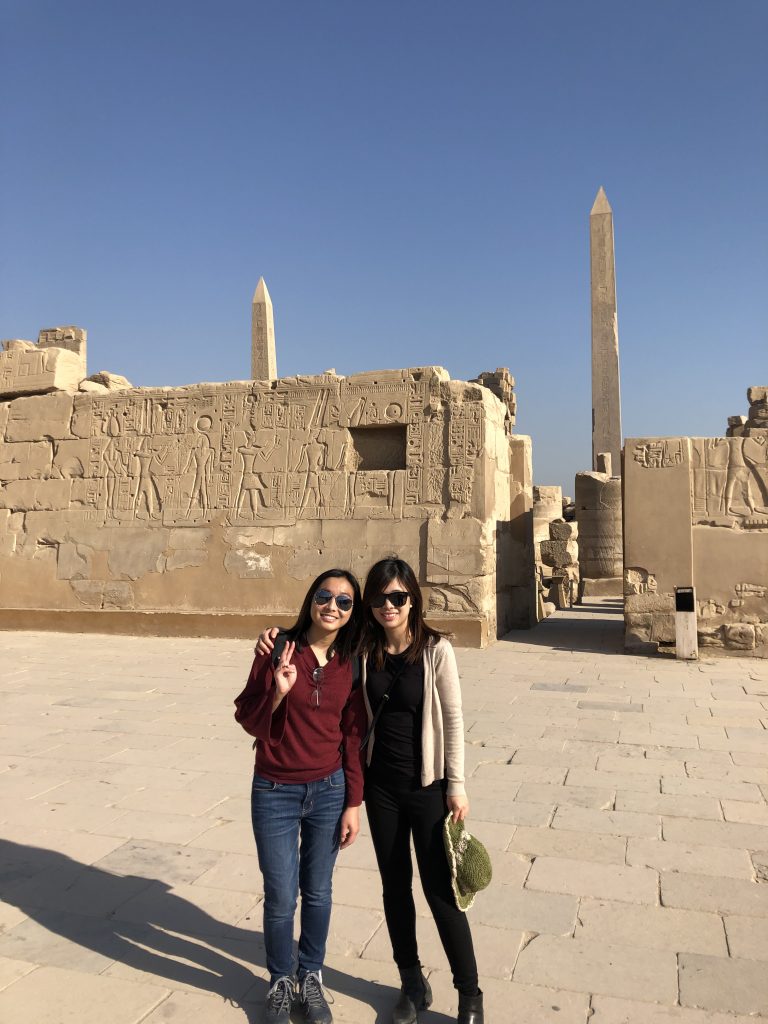
They travelled together in Jordan and Egypt in 2020, but both had to return to Macao due to the pandemic. For several months, Jordan experienced a stringent nationwide curfew, with air raid sirens echoing through the capital every day, Un recalls. The country also suffered from a supply shortage at the beginning of the pandemic and Un recalls eating only frozen meals for weeks as well as the occasional fresh vegetable delivered by her kind landlord.
“It was also very difficult to obtain real-time information as the situation unfolded rapidly and changed everyday,” Un says, expressing how grateful she is to her local friends who supported and assisted her. “It was also not an easy journey to fly back as flights kept being cancelled.” Eventually, she managed to get a flight.
During quarantine, their idea for Genervision House took shape. The pair chose the name “Genervision” to communicate a message that it’s time for the next generation to step up and create a more sustainable world, they explain.
After quarantine, both young women took up new jobs: Un worked as a research assistant for the United Nations University’s Cyber Resilience project; U freelanced as a communication consultant.
“We really want more people to learn about the UN SDGs, from school students to corporates,” says Un, who is the association’s chief operating officer while working full-time. “At first, it was just the two of us, but then in less than a year, we now have 10 core members, all of whom are volunteers,” she says, adding that some work virtually while others reside in Macao.
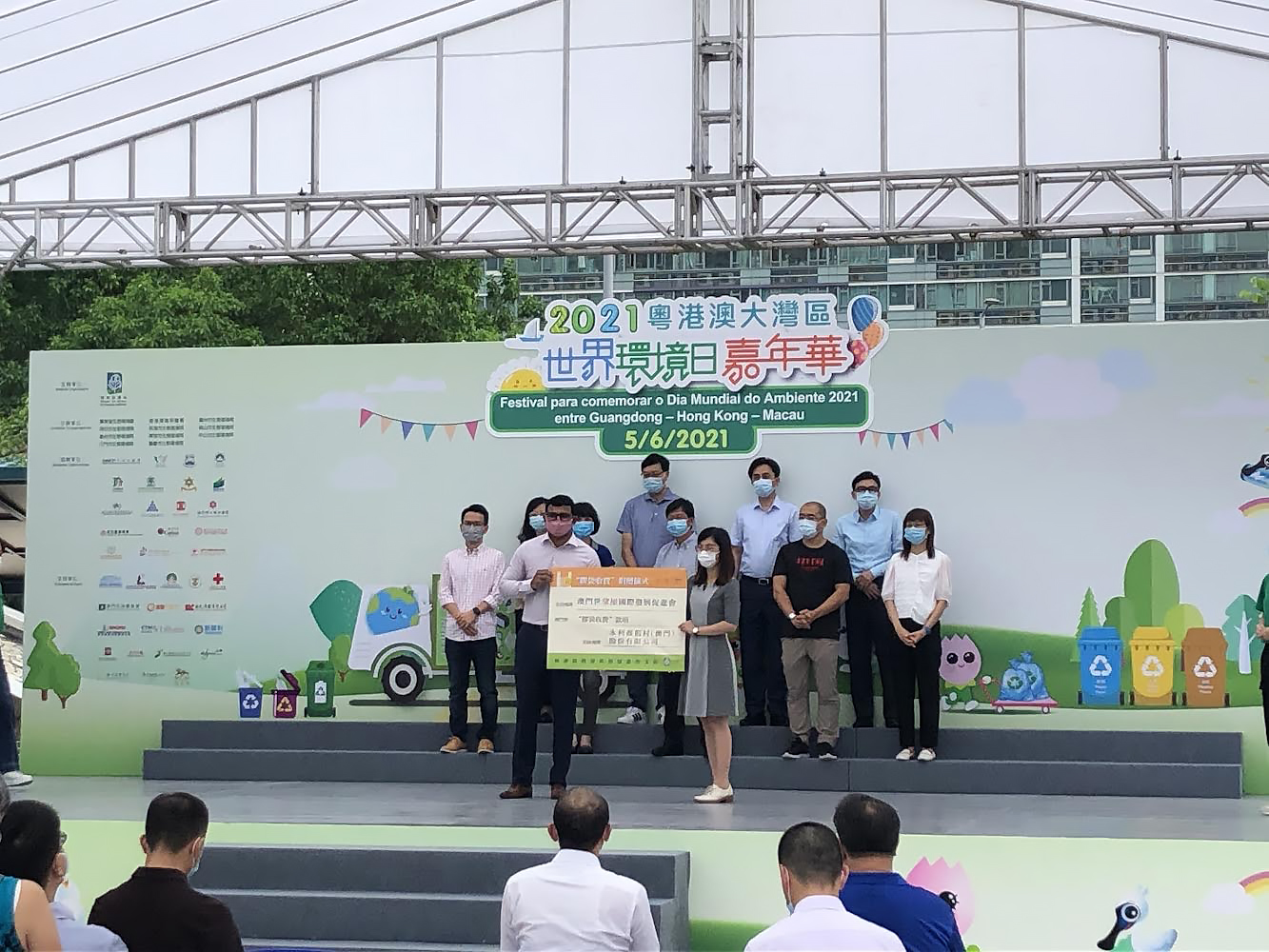
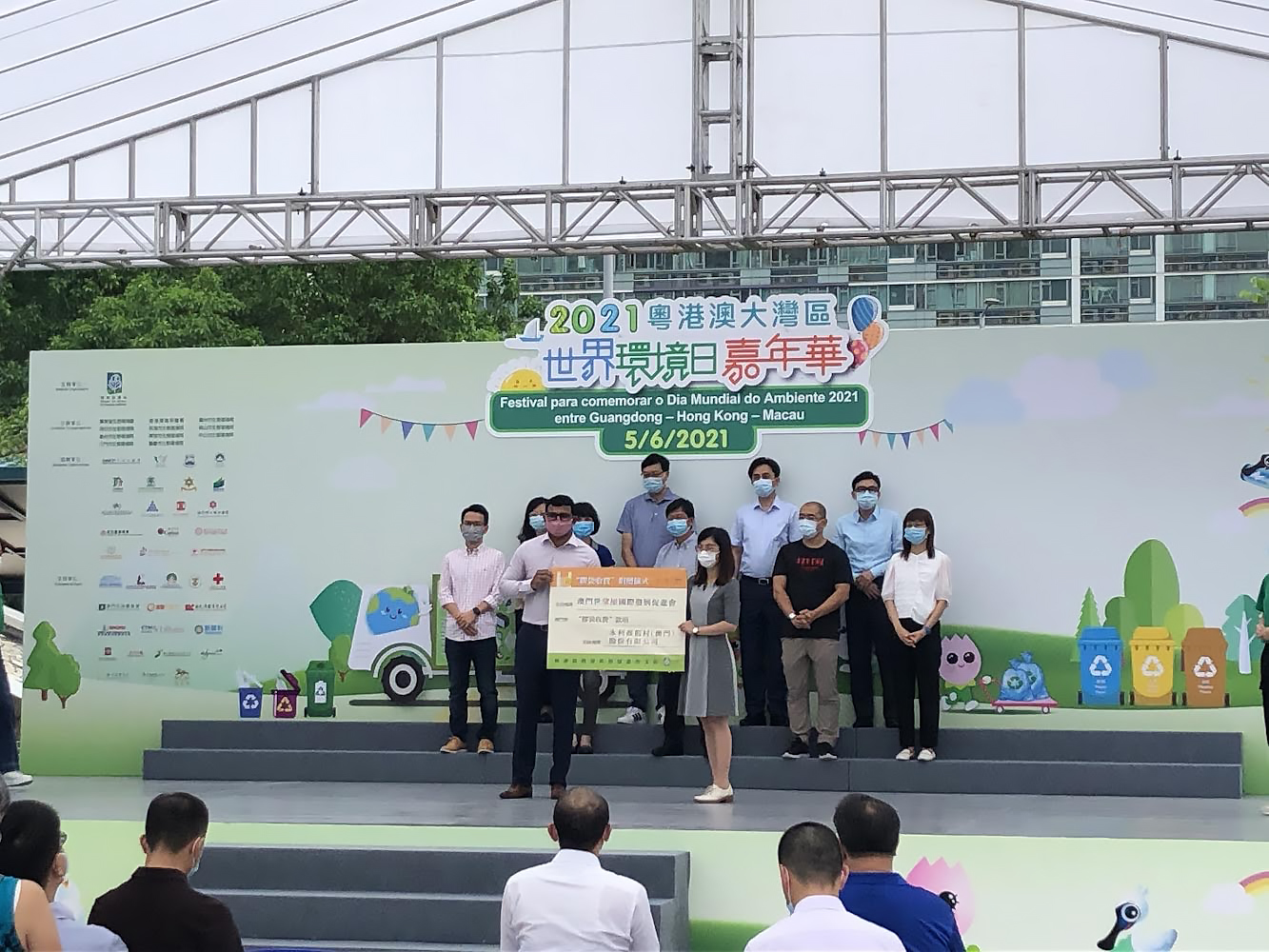
Genervision House accepts a generous donation from Wynn Macau during the Guangdong-Hong Kong-Macao Commemoration Festival on World Environment Day in June
What are the SDGs?
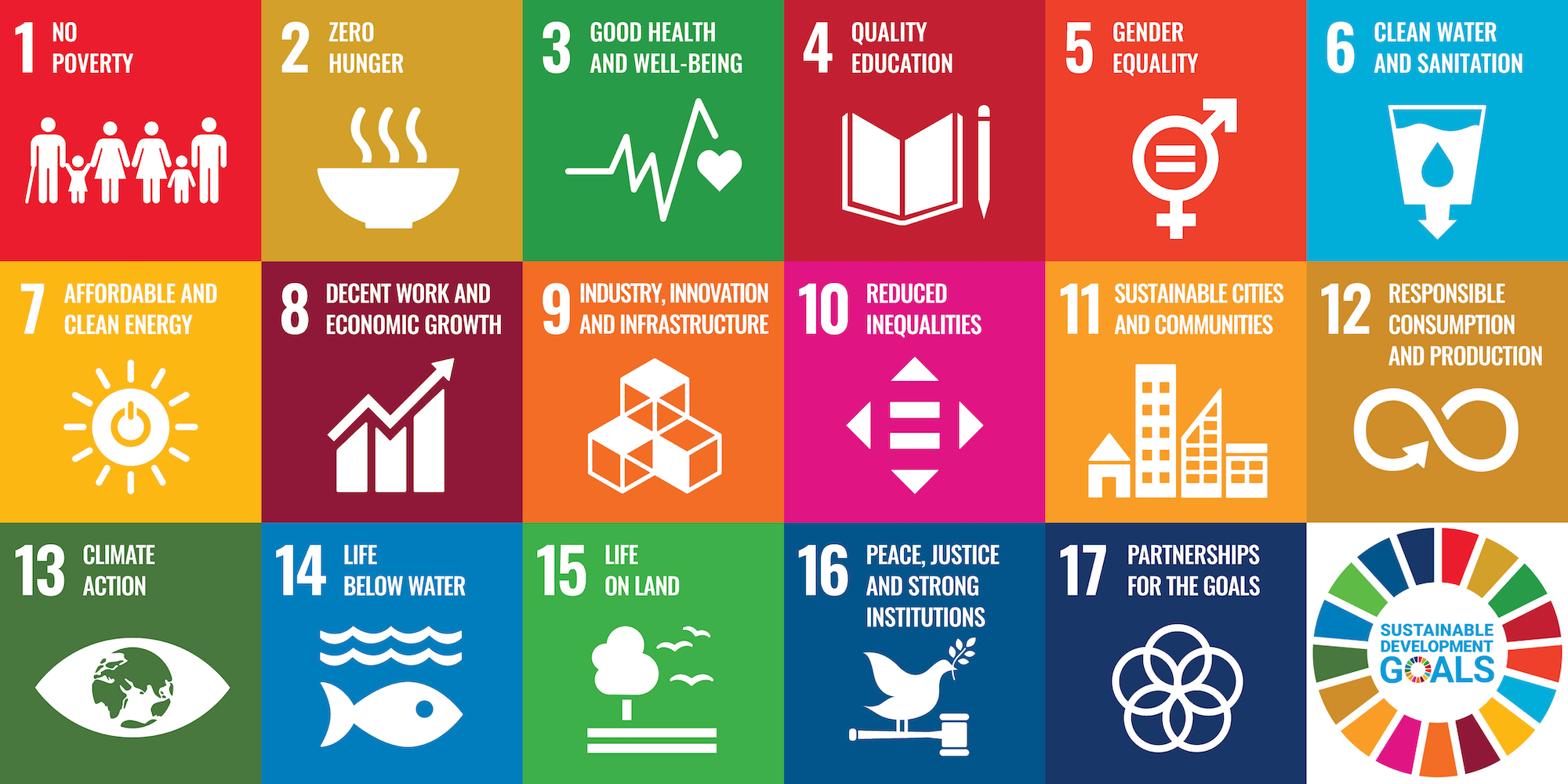
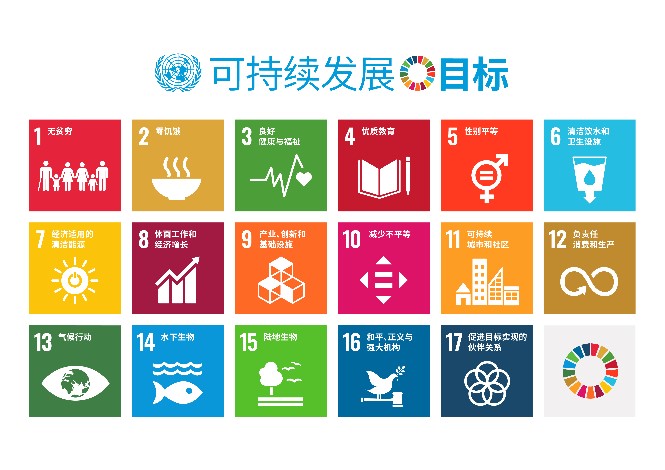
At the turn of the millennium, the UN established eight Millennium Development Goals (MDGs) to create a more equitable, healthier and more sustainable future for all. To build off the MDGs’ momentum, the UN proposed an expanded list of 17 goals in July 2014 that outlined global targets to hit by 2030. Some of the goals focus on tackling poverty — such as ‘No Poverty’, ‘Zero Hunger’, ‘Quality Education’ and ‘Reduced Inequality’ — while others tackle employment, consumption, health, wellbeing, climate action, clean water, and more.
First proposed in July 2014, the 17 Sustainable Development Goals build off the eight Millennium Development Goals
While it intends to address all the 17 SDGs in Macao in the future, Genervision House currently focuses on five areas: Quality Education, Gender Equality, Reduced Inequality, Climate Action and Partnerships for the Goals.
While all the goals are important, the pair believe these few SDGs are the most essential in Macao. For example, the UN’s “Sustainable Cities and Communities” goal focuses on making human habitats “inclusive, safe, resilient and sustainable”, which the pair says is directly relevant to Macao’s urban lifestyle.
“Macao faces flooding and typhoons,” says Un of the importance of addressing this SDG. The group also supports “smart city” initiatives because such technology has the power to improve infrastructure, communication, safety and sustainability. In addition, if Macao evolved into a smart city, the pair believes there would be greater transparency when it comes to planning, implementing and tracking Macao’s sustainability progress. For this reason, the group is proactively learning and sharing knowledge about the technology needed to make Macao a smart city.
In the same vein, the team also raises awareness about cybercrimes, because they believe Macao needs to protect citizens and companies. “This relates to the ‘resilience’ of the city,” Un says. “It also has many societal, environmental and governance benefits.”
A spirit of collaboration
But they can’t do it alone. Achieving the SDGs by 2030 will require cooperation between the government, private sector and local people. All too aware of the collective efforts needed, Genervision House holds workshops for corporations and policymakers, where the NGO demonstrates how to implement SDGs holistically.
By forging partnerships across the different sectors, Genervision House hopes to impact more people. They also advocate a three-pronged approach: raising awareness, creating a diverse community of like-minded people, and working with policymakers.
“Everyone has a role to play, and raising awareness from different corners of society is just the first step,” says 23-year-old Gladys Ng, the Environmental, Social and Governance (ESG) and community project manager at Genervision House. “Many people in Macao are unfamiliar with the term ‘sustainable development’ or perceive it as solely environmental protection. We want to start by changing people’s minds through education and media exposure.”
While the SDGs have been translated and circulated in Chinese, many misconceptions remain. “When they’re just starting to learn about the term, people might first associate it with environmental protection,” says Ng.
“If people have more opportunities and channels to learn about sustainability, it is only a matter of time that they understand the importance of the SDGs,” adds Ng, with positivity.
Un agrees, adding that they plan to raise awareness through offline activities, like workshops, and online content, such as monthly newsletters and videos. “We’ve also held experiential activities, like our Gutenberg Soap Series Workshop,” says Ng.
In collaboration with local artist Oriana Cheang, participants gathered at the Centro de Cultura e Artes Performativas Cardeal Newman in May to discuss sustainable consumption while carving pretty patterns on recycled soap collected from staycations and quarantines. They then used the patterned soap to stamp greeting cards made out of recycled paper.
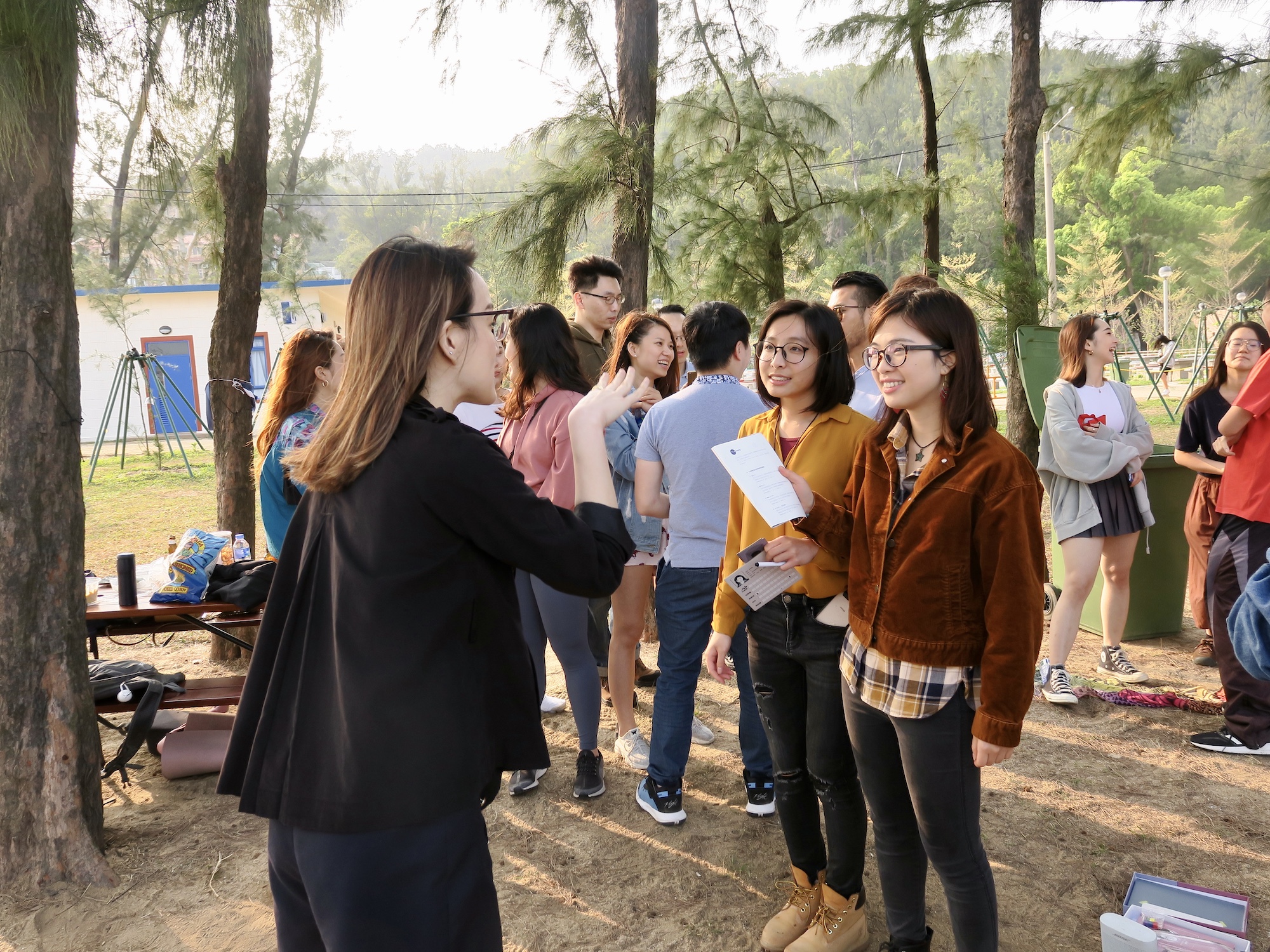
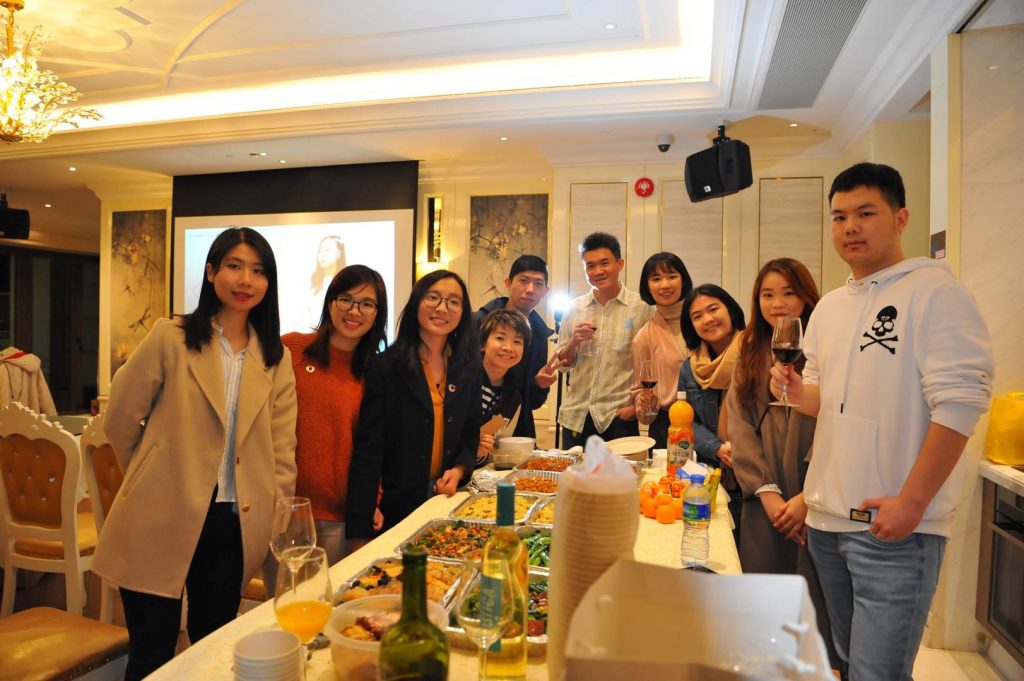
For International Women’s Day in March, Genervision House organised a potluck event in Hac Sa Beach with the Language Exchange & Culture Promotion Association to discuss gender equality – another SDG – over board games. Ng says they strive to host more events in the future and are currently planning another farming experience.
Genervision House hosted a beach potluck event with the Language Exchange & Culture Promotion Association in March 2021 to discuss gender equality
In addition to community events, the association hopes to collaborate with policymakers and present solutions to bring the SDGs to the forefront. While sustainable development has played a more central role in recent policy plans, the city has yet to integrate the SDGs into official roadmaps.
“Our vision is big, and it definitely will take time, but we are hopeful,” Un says. “We’re just beginning, but we’ve seen a lot more new faces and heard a lot more new voices who care about this topic… We can all adopt [the 17 SDGs] in our daily lives. It’s never too late to care about sustainable development.”
Want to contribute to sustainable development in Macao? Genervision House suggests five simple ways to practice the UN’s SDGs in your daily life:
1. Treat others the way you want to be treated. Lend a hand. Donate a book. Speak out against discrimination.
2. Reject, reduce, reuse, repair, recycle. If you have to buy something new, shop responsibly. Safeguard our environment and get involved in local development plans.
3. Support Fairtrade and minority-owned businesses. Mentor young people. Take a stand against workplace discrimination.
4. Read, converse, and exchange Ideas. Fostering peace through empathy and understanding. exchanges or reading.
5. Encourage your workplace to give back. Partner with charities. Encourage others to take action.
From researching environmental systems at university to volunteering with the Global Alliance of Universities on Climate, Macao student Cheng Hao Sheng is working hard to build a more sustainable future.
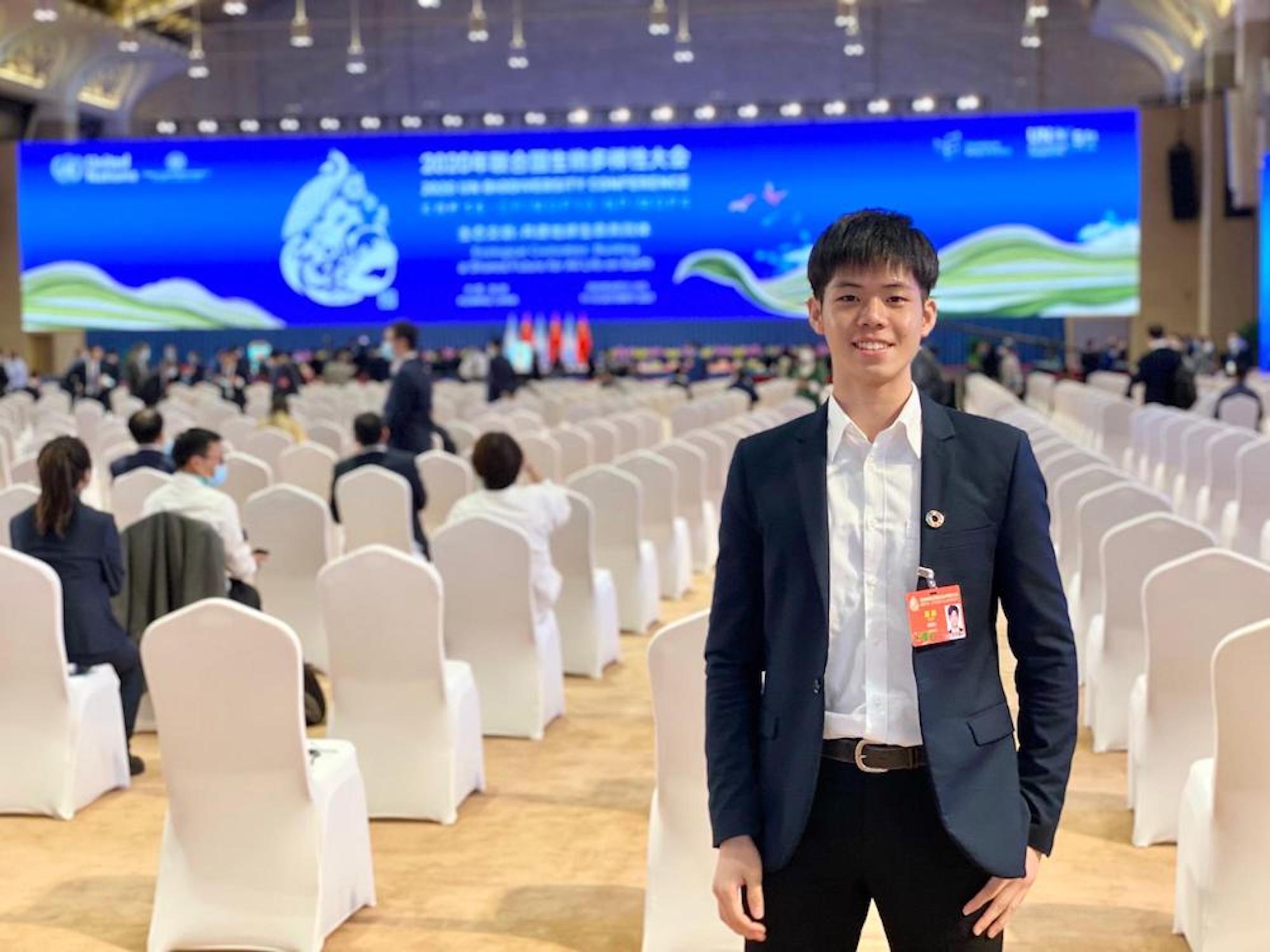
Macao student Cheng Hao Sheng (Samson) has dedicated his academic career, research and personal time to tackling climate change. Here, he appears at Octover’s UN Biodiversity Conference in Kunming, China – Photo courtesy of Cheng Hao Sheng
18 November 2021 by Cathy Lai
The impact of climate change has intensified in recent years, with extreme weather conditions devastating communities worldwide regularly. Many young people have realised that they may be left to face the worst of the climate crisis.
Instead of watching and waiting, young people are taking the future into their own hands by protesting, organising awareness campaigns and demanding urgent action to avert disaster.
Cheng Hao Sheng, 20, is among these young climate activists. The Macao-born engineering student is currently in his third year at Tsinghua University’s School of Environment in Beijing. He’s also a member of the Global Alliance of Universities on Climate (GAUC), an international initiative launched in 2019 by 15 universities from six continents, including Tsinghua University, University of Oxford and Federal University of Rio de Janeiro.
This October, Cheng started volunteering with GAUC’s Global Youth Summit on Net-Zero Future to communicate with regional leaders and influence climate policies. The five-day summit, which took place both offline and online from 25-29 October, aims to mobilise climate actions by youth and higher education in the areas of Nature & Biodiversity, Food & Health, Energy, and Transportation and more.
As a volunteer co-organiser, Cheng shared his first-hand experience with climate change via video, drafted the Climate X Global Youth Declaration and spread the word on social media. In November, the 2021 United Nations Climate Change Conference (also known as COP26) featured his video with its audience of global climate leaders.
We connect with Cheng to hear about his experience at the summit, academic and community projects, and vision for a more sustainable Macao.
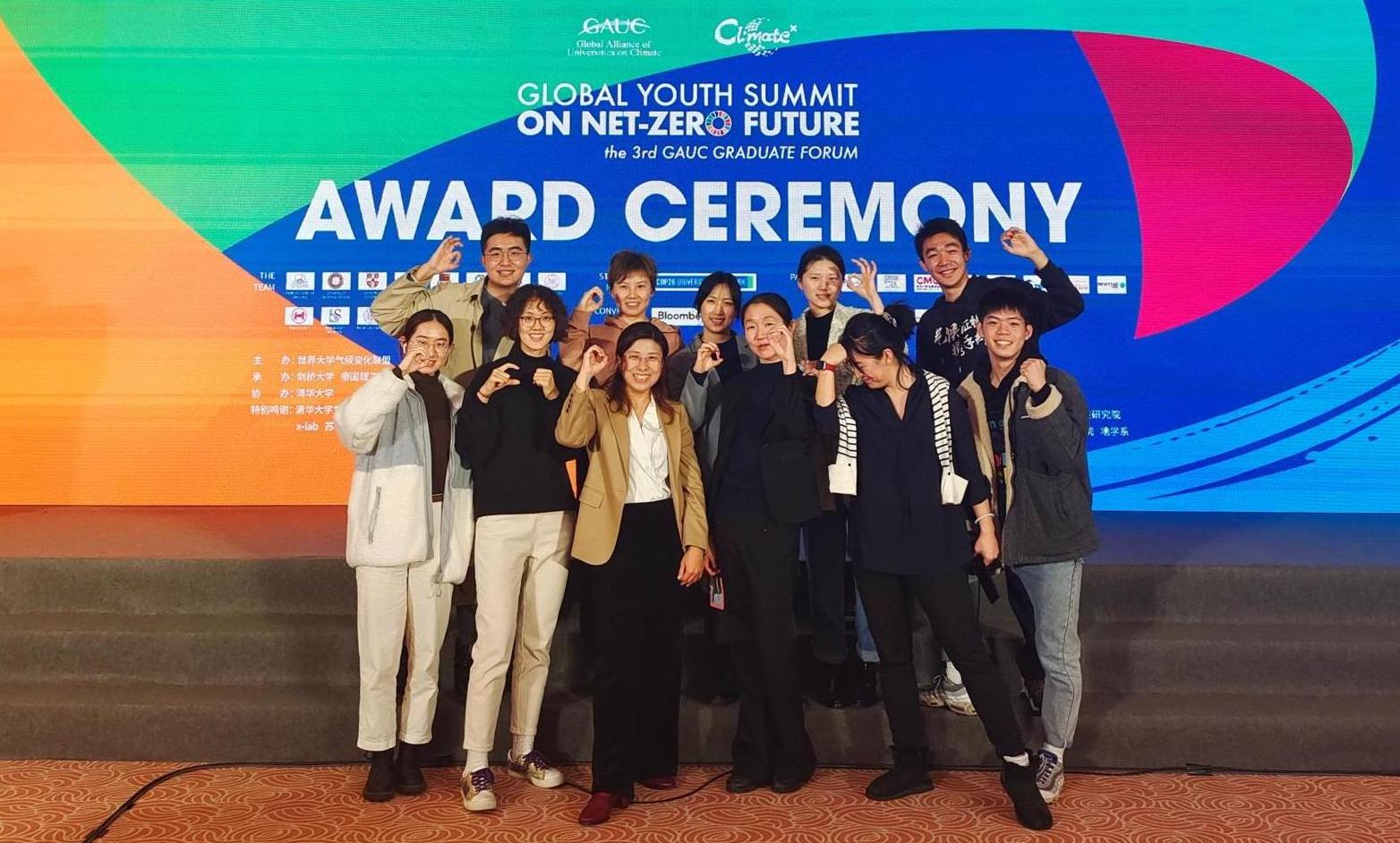
Cheng (front row on the right) helped organise the 2021 Global Youth Summit on Net-zero Future – Photo courtesy of Cheng Hao Sheng
Macao News: Why did you choose a career in environmental protection?
Cheng Hao Sheng (CHS): When I was a teenager, I learned at the Affiliated School of the University of Macau that we have been burning a lot of fossil fuels and that if we did not start conserving energy and water, we would face a resource-scarcity crisis. But what really struck me was Typhoon Hato, which hit Macao in 2017. It made me aware of the impact of climate change, which is affecting our lives right now.
In 2018, I learned about the Global Environment Programme offered by Tsinghua University during a summer camp. The class teaches technical skills in science and engineering, as well as environmental-related subjects such as diplomacy, management, economics and law.
Environmental protection is closely intertwined with our society and economy and, to tackle global environmental issues, we need people who specialise in technical skills, management and diplomatic law. I believed this programme could offer me the necessary skills to contribute to environmental protection, so I enrolled.
MN: Tell us about your experience with the Global Youth Summit on Net-Zero Future.
CHS: The Summit includes more than 30 student-led events, such as climate-research competitions, a “hackathon”, Voice Track [a collation of multimedia messages about climate change by students] and solutions-oriented meetings on how to energise youth across the world. I recorded a video for Voice Track sharing what I witnessed during Typhoon Hato, my thoughts on climate change, and the awareness campaigns and community work I do in Macao.
I also helped draft the Climate X Global Youth Declaration with students from around the globe. The declaration calls upon governments at all levels to enact legislation to combat the devastating effects of the climate crisis. Other responsibilities included writing press releases about each event and publishing them on social media.
MN: What did you learn by volunteering?
CHS: I realised once again the importance of regional and global cooperation for combating climate change. Many scholars, students, young people and citizens from around the globe are already working on the issue.
Facing large-scale crises like climate change and biodiversity loss can make us feel helpless and lonely. But GAUC has provided a dynamic platform to engage global citizens to tackle the problem together. We are not alone in this fight.
MN: What do you like to research in school?
CHS: I am particularly interested in the area of environmental economics and system analysis. [The former focuses on ecosystems’ monetary value and cost-benefit analysis; the latter researches the interaction between human activity, the environment and the economy]. When we try to formulate a solution to reduce carbon emission, it’s important to consider society, economy, environment and energy.
For instance, in 2020, China announced its goal to achieve carbon neutrality by 2060. But how do we accomplish this goal while taking care of society and providing a smooth transition for the coal workers to another industry? That’s where environmental economics and systems analysis can come to the rescue.
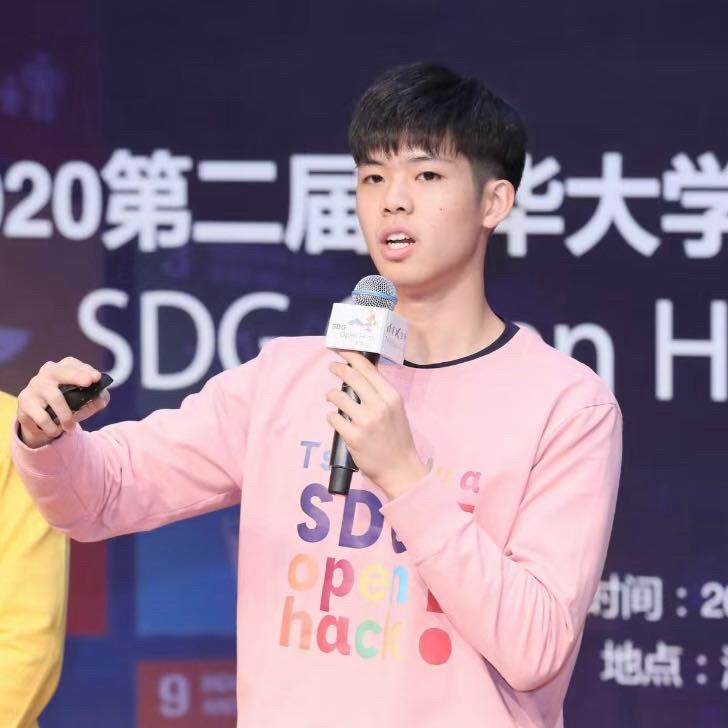
This May, Cheng joined The SDG Hackathon at Tsinghua University, where his team won first prize in the ‘Food Waste’ category by formulating a solutions-driven business model – Photo courtesy of Cheng Hao Sheng
MN: How else are you tackling the environmental issues in Macao and Beijing?
CHS: I am involved in community projects to spread awareness and knowledge about low-carbon and eco-friendly lifestyles. For instance, I am a core member of Genervision House, a Macao-based platform for knowledge sharing and advocacy that promotes the 17 United Nations Sustainable Development Goals.
Meanwhile, at Tsinghua University, I work with other students to organise environmental campaigns, such as recycling events and cleanup drives. Through these activities, we hope to inspire actions and behavioural changes.
MN: How does Macao compare to Beijing when it comes to environmental efforts?
CHS: People from Macao and Beijing may have a similar level of environmental awareness. But the implementation of environment-related policies differs. Beijing does better than Macao in promoting recycling because the city has stronger administrative means and executes more efficiently.
To help improve the environment, Macao could further promote electric cars and citywide recycling, and raise the plastic bag levy. But the government needs to be more courageous and innovative in adopting new and timely measures.
MN: What are your plans for the future?
CHS: The Global Environmental Programme at Tsinghua aims to cultivate two types of talents: environmental diplomats and specialists working at international organisations, such as the United Nations.
I am quite interested in working for these kinds of organisations, where I can help facilitate sustainable development negotiations and simultaneously balance the interests of each participating country. I may also want to become a scholar so that I can contribute to environmental protection from an academic perspective. I can’t say I have a concrete plan yet since there are a lot of possibilities.
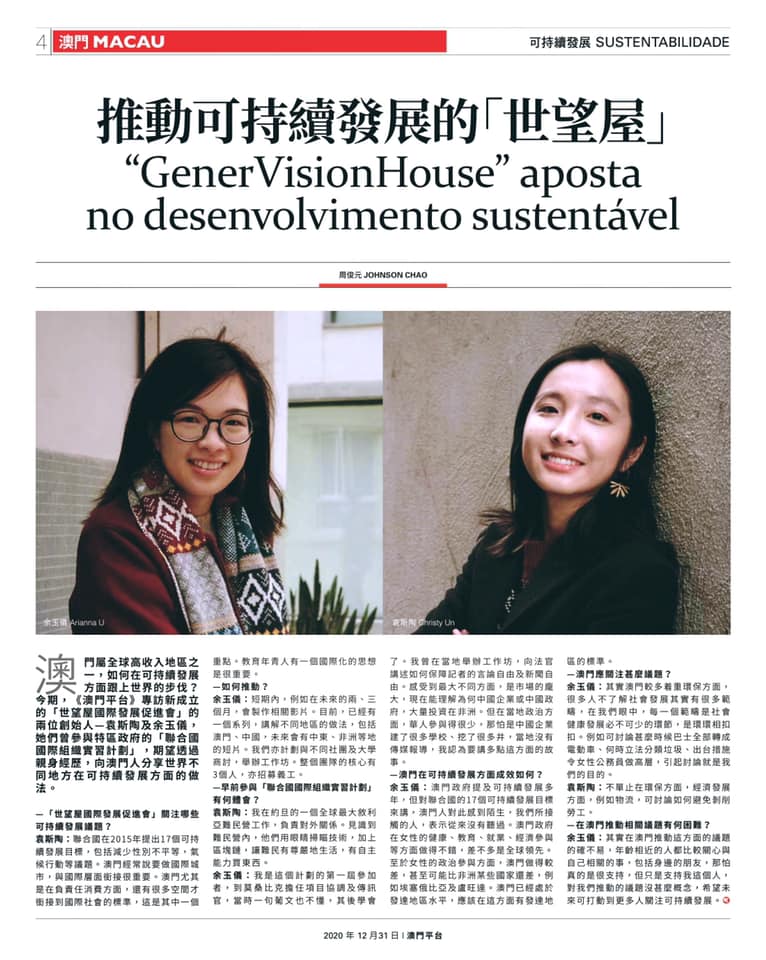
Christy Un, Co-founder and Chief Operating Officer of Genervision House (Left) and Arianna U, Co-founder and Chief Executive Officer (Right)
Non-profit organisation Genervision House has become the first official member organization from Macau to be admitted to the United Nations Sustainable Development Solutions Network Youth Initiative (SDSN Youth).
Genervision House is a knowledge exchange and advocacy platform established in Macau as well as an organization promoting the 17 UN Sustainable Development Goals (SDGs), providing the local community with sustainable development-related knowledge, videos, events and projects.
The SDGs, also known as the Global Goals, were adopted by the United Nations in 2015 as a universal call to action to end poverty, protect the planet, and ensure that by 2030 ‘all people enjoy peace and prosperity’ covering areas such as sustainable development, hunger, AIDS, and discrimination against women and girls.
Meanwhile, the SDSN Youth is a program under Sustainable Development Solutions Network (SDSN)established in 2012 by former United Nations Secretary-General Ban Ki Moon to mobilize global expertise around the SDGs through education, research, policy analysis and global cooperation.
Currently, this youth network is made up of over 750 Member Organizations, covering 127 countries, with Genevrision House becoming a full-fledged member on October 27.
“Genervision House is honoured to have become one of the members of this youth network. We will make good use of the resources and assistance provided by this network, cooperate with other youth organizations worldwide to conduct knowledge-sharing, and also hope to promote education and research concerning SDGs.” Arianna U, Co-founder and Chief Executive Officer of Genervision House said in an announcement sent to Macau News Agency.
“Becoming a member of SDSN Youth has been one of the main goals for Genervision House in 2021, and we are pleased to have achieved it before the end of the year. We look forward to engaging with this international network in the future to share more international perspectives on sustainable development with people in Macau.”
Genervision House currently engages in online content production as well as offline community events to advocate for the 17 UN SDGs but it plans to collaborate with policymakers to provide workshops and constructive solutions in order to improve the social, economic and environmental aspects of local development.
Macao-based advocacy group leads local drive for sustainable development goals with online content production and offline community events.
Genervision House founders Christy Un and Arianna U – All photos courtesy of Genervision House
STAFF REPORTER
Genervision House has been admitted to the United Nations Sustainable Development Solutions Network Youth Initiative (SDSN Youth), and plans to increase its advocacy for the organisation’s 17 Sustainable Development Goals (SDGs)
SDSN Youth is a programme under Sustainable Development Solutions Network. In 2012, former United Nations Secretary-General Ban Ki-moon established SDSN to mobilise global expertise around the SDGs through education, research, policy analysis and global cooperation. Currently, this youth network is made up of over 750 Member Organisations, covering 127 countries.
Christy Un, Co-founder and Chief Operation Officer of Macao-based Genervision House, said: “Genervision House is honoured to have become one of the members under this youth network. We will make good use of its resources, cooperate with other youth organisations worldwide to conduct knowledge-sharing, and also hope to promote education and research concerning SDGs.”
Arianna U, Co-founder and Chief Executive Officer of Genervision House, added: “Becoming a member of SDSN Youth has been one of the main goals for Genervision House in 2021, and we are pleased to have achieved it before the end of the year. We look forward to engaging with this international network in the future to share more international perspectives on sustainable development with people in Macao.”
Genervision House’s Arianna U at the World Environment Day 2021 between Guangdong-Hong Kong-Macao commemoration festival in June
Genervision House is a Macao-based knowledge exchange and advocacy platform which promotes the 17 UN SDGs, providing the local community with sustainable development-related knowledge, videos, events and projects.
Currently, Genervision House engages in online content production as well as offline community events to advocate for the 17 UN SDGs. In future, Genervision House hopes to collaborate with policy implementers and provide workshops and constructive solutions in order to improve the social, economic and environmental aspects of local development.
距離2030年還有九年的時間,要在限期內逐一實現17個可持續發展目標,兩位女生坦言“世望屋”的未來挑戰與機遇並在。二人表示,“世望屋”正與不同社團、高等院校和大型企業合作,透過創新形式,持續向大眾普及可持續發展目標的知識,亦會充當橋樑角色,努力匯聚各方意見,促進資訊交流。未來,世望屋期望能繼續為社會不同行業、界別提供可持續發展方面的關鍵資訊。“世望屋 ”亦計劃加入在聯合國主持下運作的‘可持續發展解決方案網絡’(Sustainable Development Solutions Network,簡稱“SDSN”),從而深化與國際間的交流和合作,協助澳門整體社會掌握最新國際社會在推動可持續發展方面的趨勢。要實現目標還有不少距離,但正如二人堅持的理念所言:“對世界總懷抱一個希望,只要團結努力,我們能令它變得更好。”
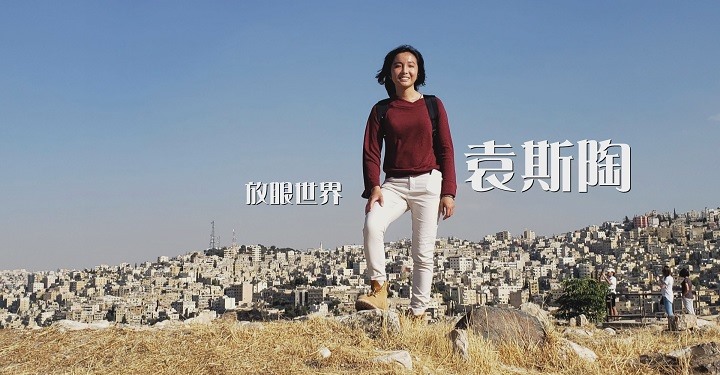
Macau people • Macau Stories TV Interview: The Aspiration & Perseverance of the Co-Founder of Genervision House
One of the founders of Genervision House, Christy, was interviewed by the TDM Canal Macau a few days ago to share her personal story and experience, and the original intention of establishing Genervision House. At the same time, Arianna, another co-founder of Genervision House, also shared the NGO’s past activities and related work in the film.
Christy once participated in the UNHCR internship program, while Arianna participated in the UNESCO internship program. They met and became friends because of the internship program. While sharing each other’s experiences in implementing projects in the developing countries, they recalled some of the touching stories, and it was that moment which gave birth to the idea of establishing Genervision House.
Until now, they are still sticking to their original aspirations on different platforms, focusing on issues of sustainable development.
Grateful for this opportunity with TDM, and hope to bring this enthusiasm and voice to the Macau society.