What’s the difference between global warming and climate change? Net zero versus carbon neutrality? Macao advocacy group, Genervision House, unpacks commonly misused environmental terms.
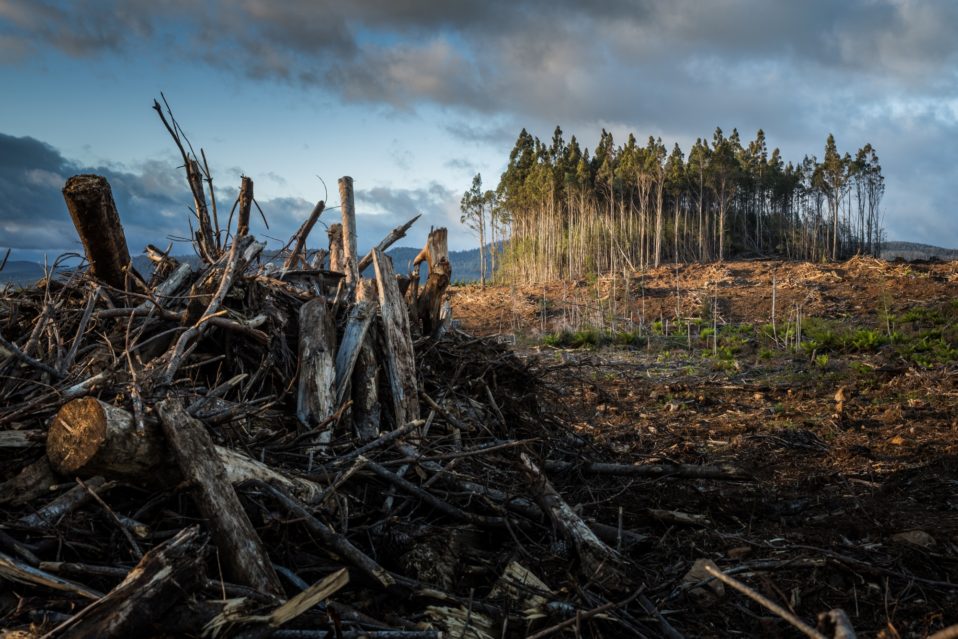
Photo by Matt Palmer
Climate change is a global phenomenon that affects us all. Yet the terminology and discourse can be confusing if you’re not part of the scientific community and unfamiliar with the lingo. For everyday people who want to better understand these important issues, we’ve created a brief introduction to a few key climate change terms.
Climate
When discussing climate change, first, we should know what “climate” means. Climate refers to the long-term (30 years or more) patterns of weather in a given area.
What determines climate?
The average temperature, amount of rainfall, snow, and several other aspects of the weather all contribute to an area’s climate. For example, Macao has a subtropical oceanic monsoon climate that sees high temperatures and heavy rainfall.
Climate Change vs Global Warming
These two terms are often used interchangeably, but they are not the same thing. Global warming refers to the prolonged increase in the average temperature caused by greenhouse gas emissions. According to the latest science, the Earth has warmed by 1.1°C since the pre-industrial period (1850-1990). Meanwhile, climate change describes shifts in existing weather patterns due to global warming.
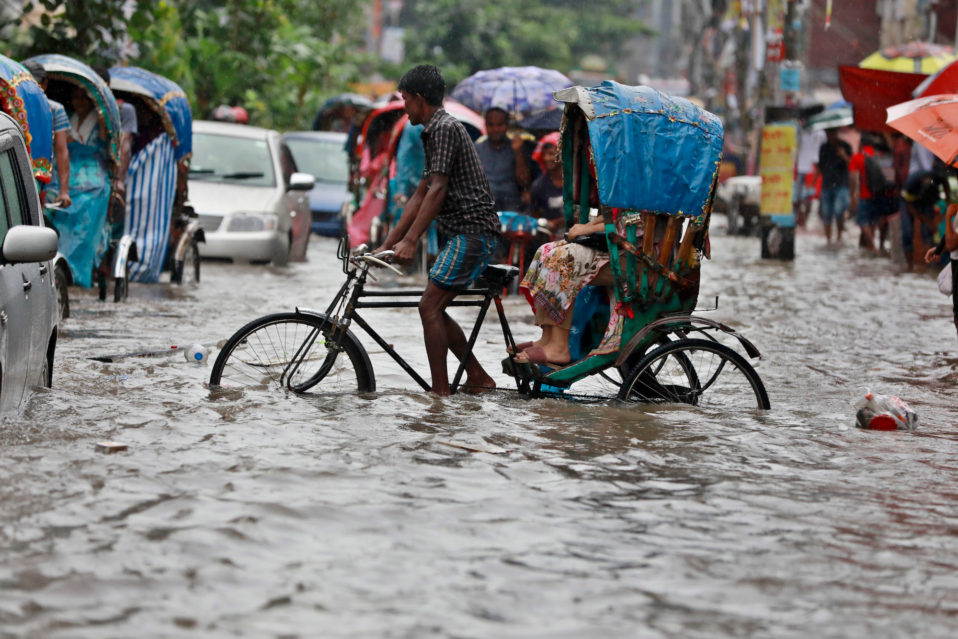
What’s more, the effects of climate change are not limited to warmer weather. Climate change will make extreme weather events (such as droughts, heatwaves and storms) more intense and frequent in some regions. For example, the continued warming of the North Pole and the loss of sea ice may have led to the rare, intense winter storm that hit Texas, a US state that lies in the subtropical zone, in 2021.
Greenhouse Gas Emissions vs Carbon Emissions
You’ve probably heard of carbon emissions – they’re the most commonly known source of global warming. In this context, “carbon” refers to carbon dioxide (CO2), a major greenhouse gas emitted by human activities.
In addition to CO2, other major greenhouse gases (GHGs) include Methane (CH4) and Nitrous Oxide (N2O). Some level of GHG in the atmosphere is necessary: these warming gases insulate the Earth by trapping heat, which makes the planet suitable for life.
But as is often the case, too much of a good thing becomes a bad thing. And right now, the amount of GHGs human activities are emitting tips the planet’s natural balance and destabilises the climate.
Natural Climate Change vs Anthropogenic Climate Change
Much debate has focused on the cause of climate change. Some say climate change is a natural process, because the Earth has had ice ages and extremely hot periods throughout its history. Indeed, some natural processes – such as small changes in the Earth’s orbit, volcanic eruptions, and changes in energy coming from the sun – have influenced climate change.
However, the impact of these natural occurrences is relatively small when compared to that of anthropogenic – meaning, human – activities. Human activities, including the burning of fossil fuels and deforestation, emit GHGs at a scale and speed that was unprecedented before the Industrial Revolution (when humans began burning coal).
This is well-documented in the latest Intergovernmental Panel on Climate Change Assessment Report, which states that “observed increases in well-mixed greenhouse gas concentrations since around 1750 are unequivocally caused by human activities”. So, it’s more precise to describe the climate change we are currently experiencing as a human-caused, or anthropogenic, phenomenon.
Net Zero Carbon vs Carbon Neutrality
Pledges from governments and businesses to achieve “net-zero carbon” emissions or “carbon neutrality” have proliferated in recent years. And though these pledges sound very similar and both focus on carbon emissions, there is a slight difference when it comes to the actions they will take.
“Net zero carbon” emissions focus on reducing carbon emissions of certain activities as much as possible, then removing inevitable emissions from the activities.
For example, to reduce the carbon emissions from traveling, you can opt for a train instead of a plane because the former emits less CO2. But taking a train will still cause some carbon emissions. To take a “net zero carbon” trip, you can purchase credits to compensate for the inevitable emissions. Sometimes there are also “net zero” emissions pledges, which expands the scope to any and all GHG emissions.
“Carbon neutrality” doesn’t necessarily require a company or government to reduce emissions. Instead, they can offset the GHGs they emit by investing in environmental or community projects that reduce GHGs somewhere else in the world, effectively balancing out the emissions. Offsetting can be done through many ways, most commonly by planting trees, restoring forests, and investing in renewable energy.
You can also pay someone else to not emit the same amount of GHGs – a method known as a “cap and trade” system. For example, two companies in the same area are each given an emissions allowance of 10 tons of CO2 per month; emitting more will result in a penalty. Company A usually emits 15 tons but doesn’t want to pay a fine, while Company B has always emitted less than 5 tons. In this scenario, Company A can pay Company B to trade their remaining 5 tons emissions allowance to avoid a fine.
In essence, while “net zero carbon” focuses on reducing emissions and then considers removals, “carbon neutrality” focuses on balancing emissions and removals; in fact, entities that have pledged to become carbon neutral can actually increase their emissions – as long as they can offset it.
Global Warming Potential
Different GHGs have different “warming powers”, which are referred to as their Global Warming Potential (GWP). GWP measures how much heat 1 ton of a specific gas can absorb over a period of time, compared to CO2, which scientists have chosen as the baseline.
Here’s an example: Over 100 years, CO2 has a GWP of 1, while CH4 has a GWP of 28-34 and N2O has a GWP of 265-298. This means that CH4 and N2O are more potent than CO2. The GWP of a gas decreases as time goes on. For instance, in the first 20 years that CH4 is released into the air, it will trap more heat than in the following 80 years.
Carbon Dioxide Equivalents
GHG emissions are sometimes expressed in a unit called “carbon dioxide equivalent” (CO2-e). Essentially, this unit expresses a greenhouse gas’s contribution to global warming, relative to CO2. By converting greenhouse gas emission into a CO2 equivalent, it enables scientists to compare standardised values and calculate their cumulative impact.
To find the carbon dioxide equivalent of a gas, simply multiply its GWP by the gas’s mass in tons. For example, if a company emitted 1 ton of CO2 (which has a GWP of 1) and 1 ton of CH4 (uses a GWP of 28) in the previous year, the total amount of GHG emissions will be expressed as 29 ton CO2-e in a performance report.
Climate change impacts all of us, and we should all be able to understand how it affects us. Unfortunately, climate talk is often filled with scientific terms, which can make it difficult to understand. By boiling them down to basic terms that everyone can comprehend, more people can join the climate change conversation and take action on it.
Motivated by the hardships of the pandemic, two Macao young professionals founded Genervision House to promote the UN’s Sustainable Development Goals at home.
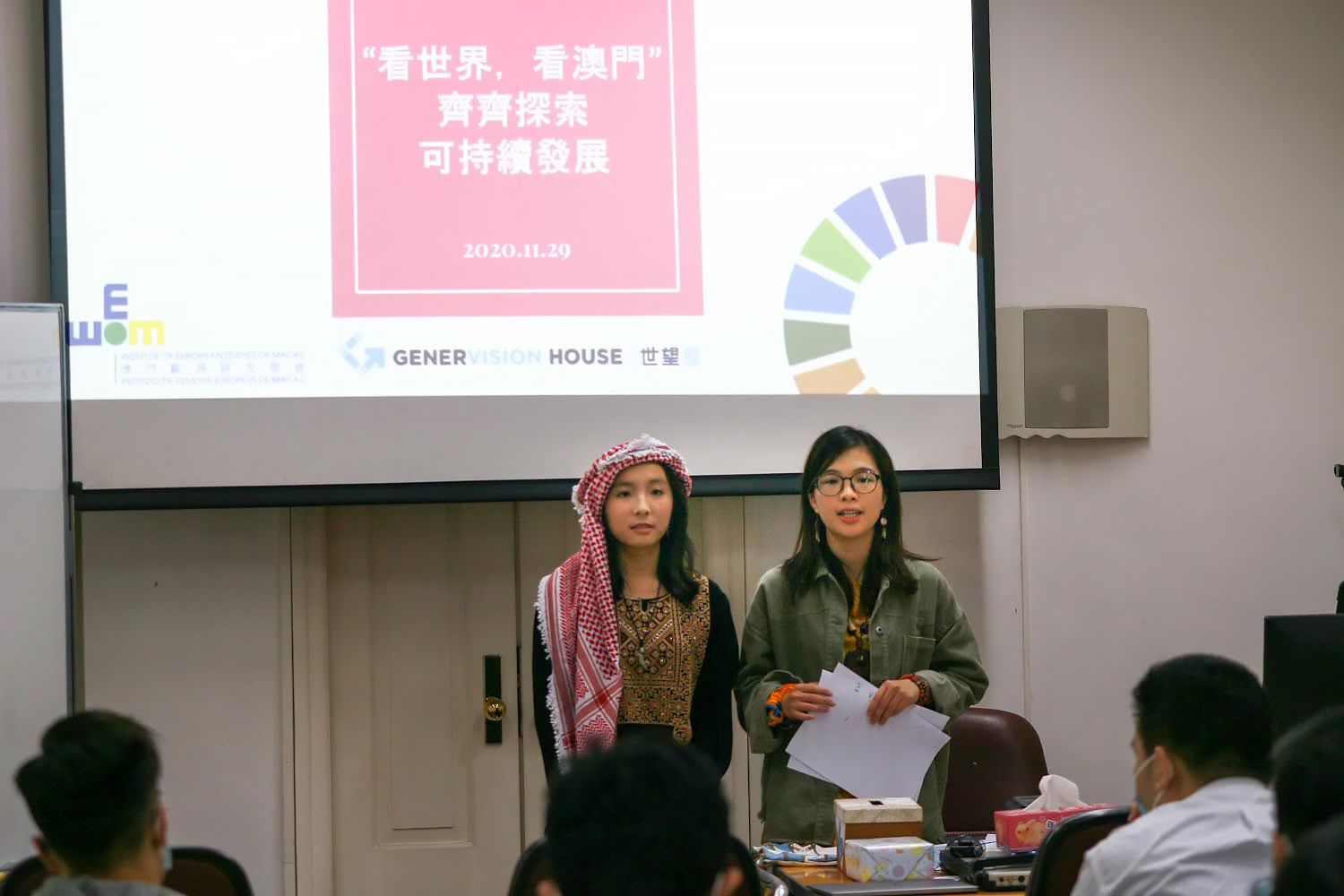
Genervision House founders Christy Un and Arianna U at a UN Sustainable Development Goal workshop at the Institute of European Studies of Macau – All photos courtesy of Genervision House
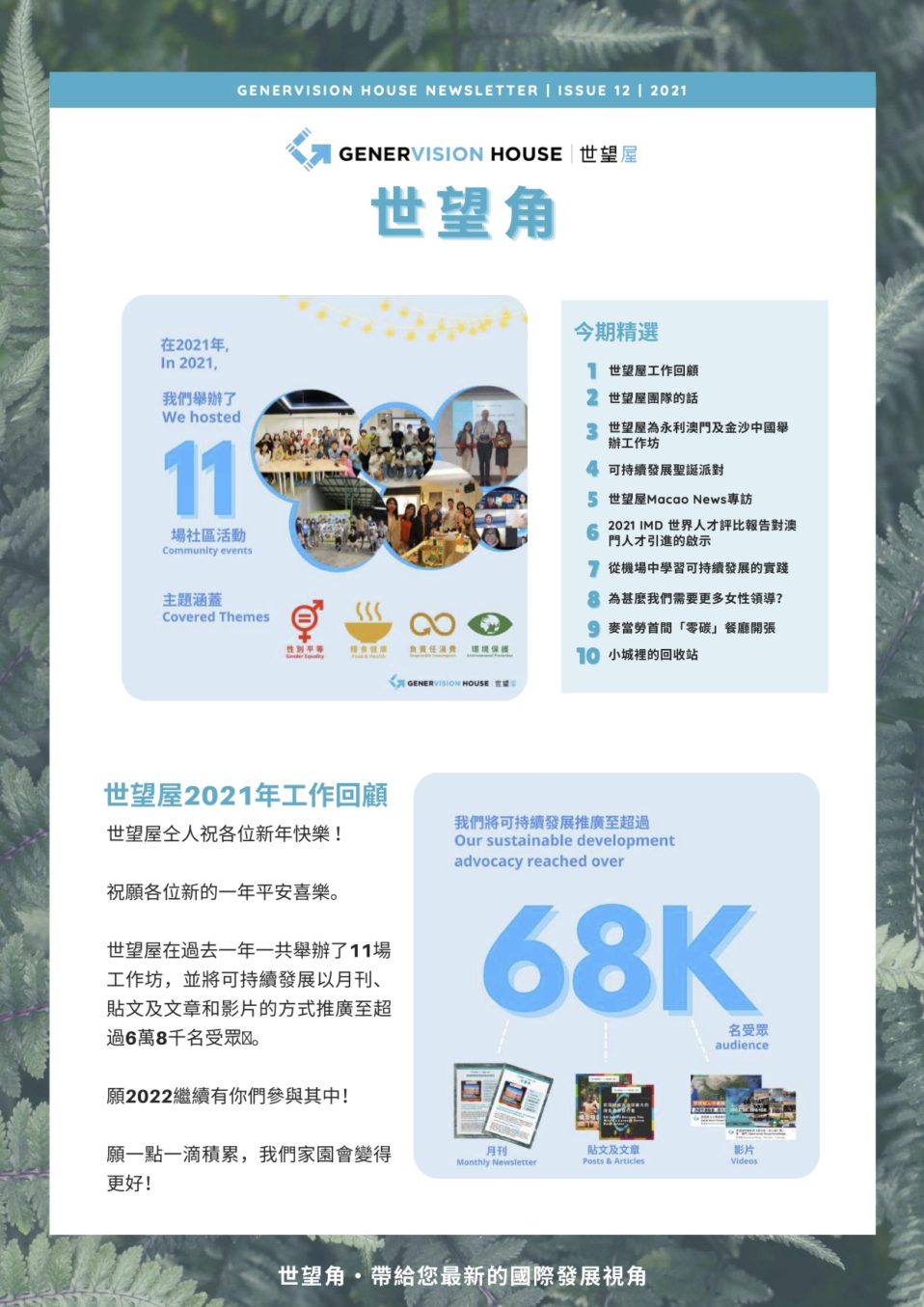
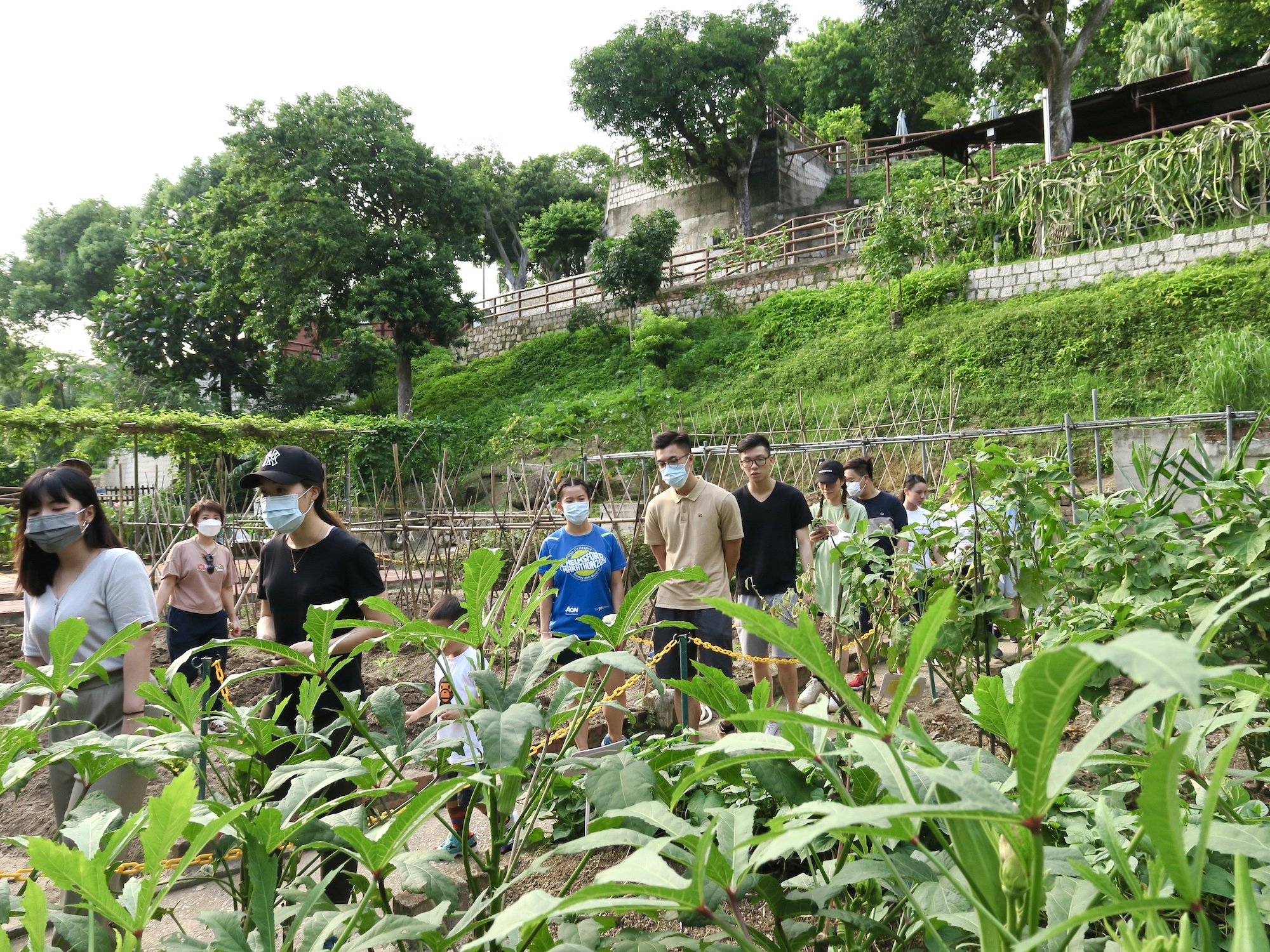
During a day trip to Oscar Farm in Coloane in July, Macao residents toured the grounds, learned how to harvest ingredients, and discussed sustainable food systems and agriculture practices. Organised by Genervision House, a local NGO founded by two young professionals in January 2021, and the Society of Food and Environmental Health, the farming workshop raised awareness about sustainability through hands-on experiences. And that’s exactly what Genervision House is all about: sharing knowledge and promoting sustainable development with its events, educational videos, experiential field trips and cross-sector collaborations.
Genervision House arranged a farm tour in Coloane with the Society of Food and Environmental Health to discuss food waste and sustainability
Though it’s been less than a year, the group’s work has already garnered recognition. In October, the United Nations Sustainable Development Solutions Network Youth (SDSN Youth) programme approved Genervision House to join its international network, marking a first for Macao. With 750 member organisations across 127 countries, the UN programme seeks to empower young people to plan, advocate and work towards achieving the UN’s 17 Sustainable Development Goals (SDGs).
“It feels exciting to be part of [SDSN Youth] because we can do more with international resources and assistance,” says 24-year-old Genervision House co-founder and Macao resident Christy Un, her eyes shining with excitement. “We want to collaborate with different experts worldwide so we could bring in the best practices into Macao, as well as share our stories with a global audience.”
While starting an advocacy and knowledge exchange platform initiative during the Covid-19 pandemic posed challenges, Un and fellow 27-year-old co-founder Arianna U, say the devastation and uncertainty around the globe actually motivated them to act.
In the years leading up to Genervision House, U, also a Macao resident, had been working in Mozambique as one of the first UNESCO interns from Macao. Meanwhile, Un studied at The London School of Economics and Political Science before joining a UNHCR internship in Jordan. Though they hadn’t met, Un discovered U’s blog online and reached out in 2019.
They travelled together in Jordan and Egypt in 2020, but both had to return to Macao due to the pandemic. For several months, Jordan experienced a stringent nationwide curfew, with air raid sirens echoing through the capital every day, Un recalls. The country also suffered from a supply shortage at the beginning of the pandemic and Un recalls eating only frozen meals for weeks as well as the occasional fresh vegetable delivered by her kind landlord.
“It was also very difficult to obtain real-time information as the situation unfolded rapidly and changed everyday,” Un says, expressing how grateful she is to her local friends who supported and assisted her. “It was also not an easy journey to fly back as flights kept being cancelled.” Eventually, she managed to get a flight.
During quarantine, their idea for Genervision House took shape. The pair chose the name “Genervision” to communicate a message that it’s time for the next generation to step up and create a more sustainable world, they explain.
After quarantine, both young women took up new jobs: Un worked as a research assistant for the United Nations University’s Cyber Resilience project; U freelanced as a communication consultant.
“We really want more people to learn about the UN SDGs, from school students to corporates,” says Un, who is the association’s chief operating officer while working full-time. “At first, it was just the two of us, but then in less than a year, we now have 10 core members, all of whom are volunteers,” she says, adding that some work virtually while others reside in Macao.
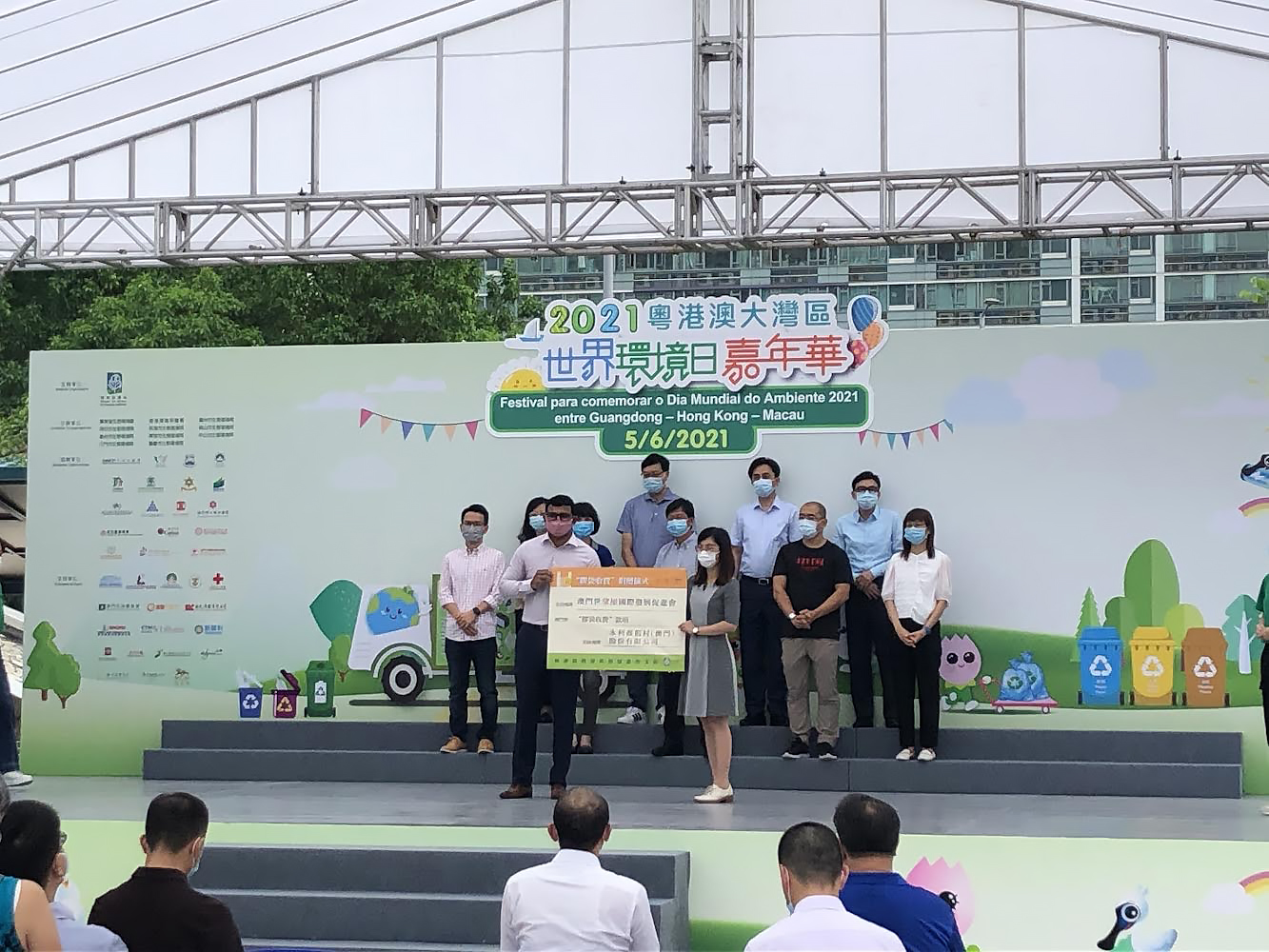
Genervision House accepts a generous donation from Wynn Macau during the Guangdong-Hong Kong-Macao Commemoration Festival on World Environment Day in June
What are the SDGs?
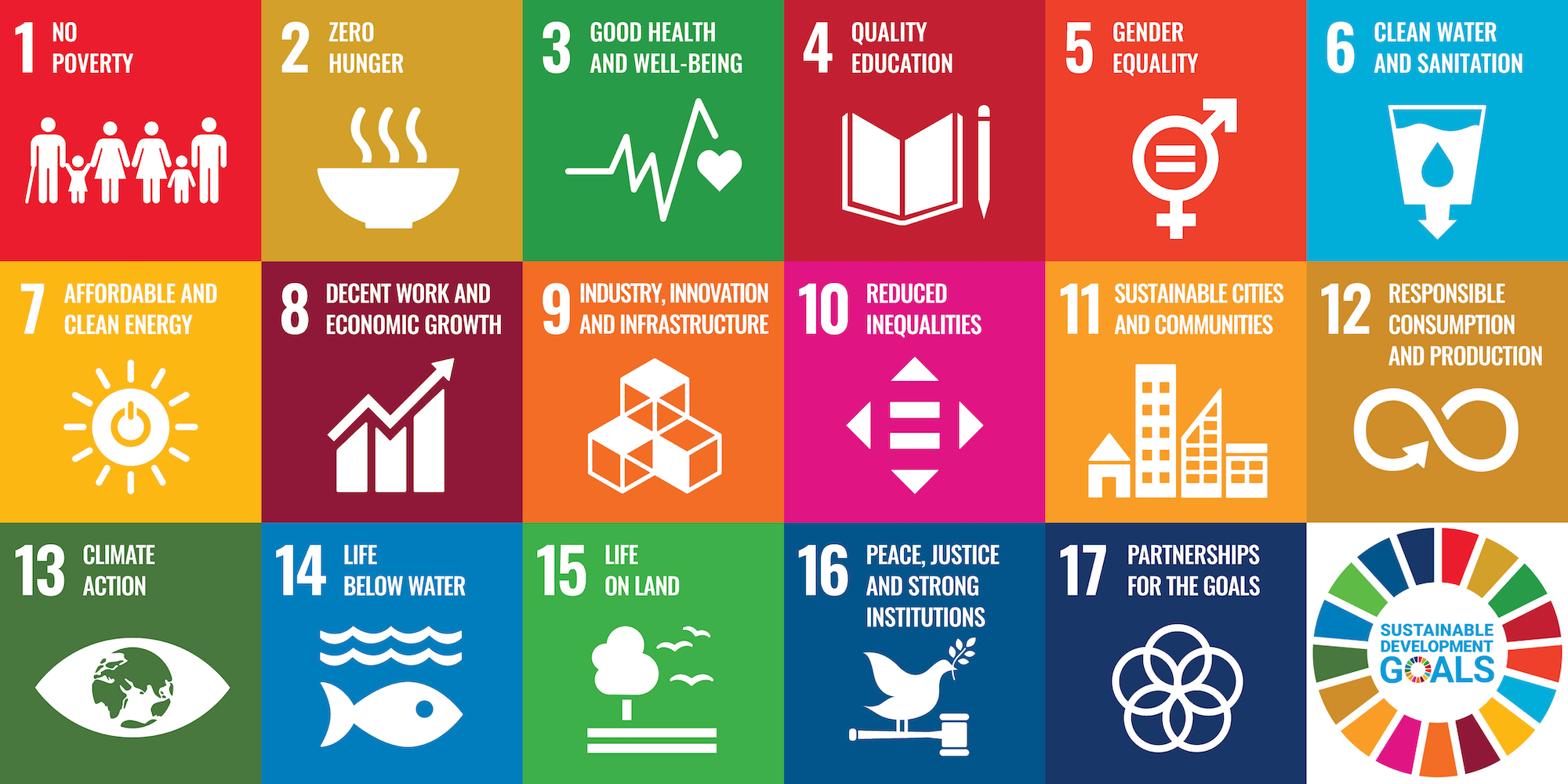
At the turn of the millennium, the UN established eight Millennium Development Goals (MDGs) to create a more equitable, healthier and more sustainable future for all. To build off the MDGs’ momentum, the UN proposed an expanded list of 17 goals in July 2014 that outlined global targets to hit by 2030. Some of the goals focus on tackling poverty — such as ‘No Poverty’, ‘Zero Hunger’, ‘Quality Education’ and ‘Reduced Inequality’ — while others tackle employment, consumption, health, wellbeing, climate action, clean water, and more.
First proposed in July 2014, the 17 Sustainable Development Goals build off the eight Millennium Development Goals
While it intends to address all the 17 SDGs in Macao in the future, Genervision House currently focuses on five areas: Quality Education, Gender Equality, Reduced Inequality, Climate Action and Partnerships for the Goals.
While all the goals are important, the pair believe these few SDGs are the most essential in Macao. For example, the UN’s “Sustainable Cities and Communities” goal focuses on making human habitats “inclusive, safe, resilient and sustainable”, which the pair says is directly relevant to Macao’s urban lifestyle.
“Macao faces flooding and typhoons,” says Un of the importance of addressing this SDG. The group also supports “smart city” initiatives because such technology has the power to improve infrastructure, communication, safety and sustainability. In addition, if Macao evolved into a smart city, the pair believes there would be greater transparency when it comes to planning, implementing and tracking Macao’s sustainability progress. For this reason, the group is proactively learning and sharing knowledge about the technology needed to make Macao a smart city.
In the same vein, the team also raises awareness about cybercrimes, because they believe Macao needs to protect citizens and companies. “This relates to the ‘resilience’ of the city,” Un says. “It also has many societal, environmental and governance benefits.”
A spirit of collaboration
But they can’t do it alone. Achieving the SDGs by 2030 will require cooperation between the government, private sector and local people. All too aware of the collective efforts needed, Genervision House holds workshops for corporations and policymakers, where the NGO demonstrates how to implement SDGs holistically.
By forging partnerships across the different sectors, Genervision House hopes to impact more people. They also advocate a three-pronged approach: raising awareness, creating a diverse community of like-minded people, and working with policymakers.
“Everyone has a role to play, and raising awareness from different corners of society is just the first step,” says 23-year-old Gladys Ng, the Environmental, Social and Governance (ESG) and community project manager at Genervision House. “Many people in Macao are unfamiliar with the term ‘sustainable development’ or perceive it as solely environmental protection. We want to start by changing people’s minds through education and media exposure.”
While the SDGs have been translated and circulated in Chinese, many misconceptions remain. “When they’re just starting to learn about the term, people might first associate it with environmental protection,” says Ng.
“If people have more opportunities and channels to learn about sustainability, it is only a matter of time that they understand the importance of the SDGs,” adds Ng, with positivity.
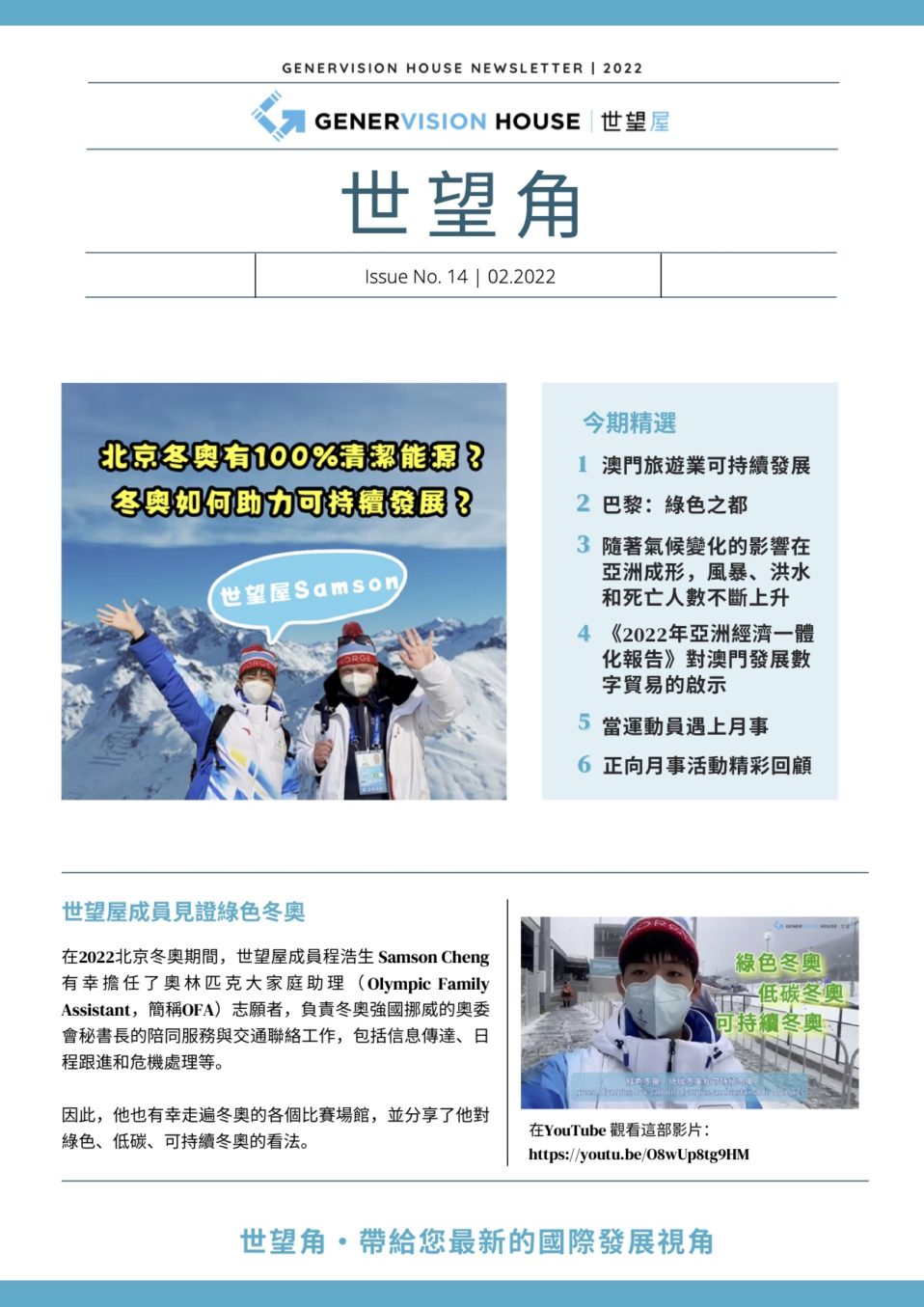
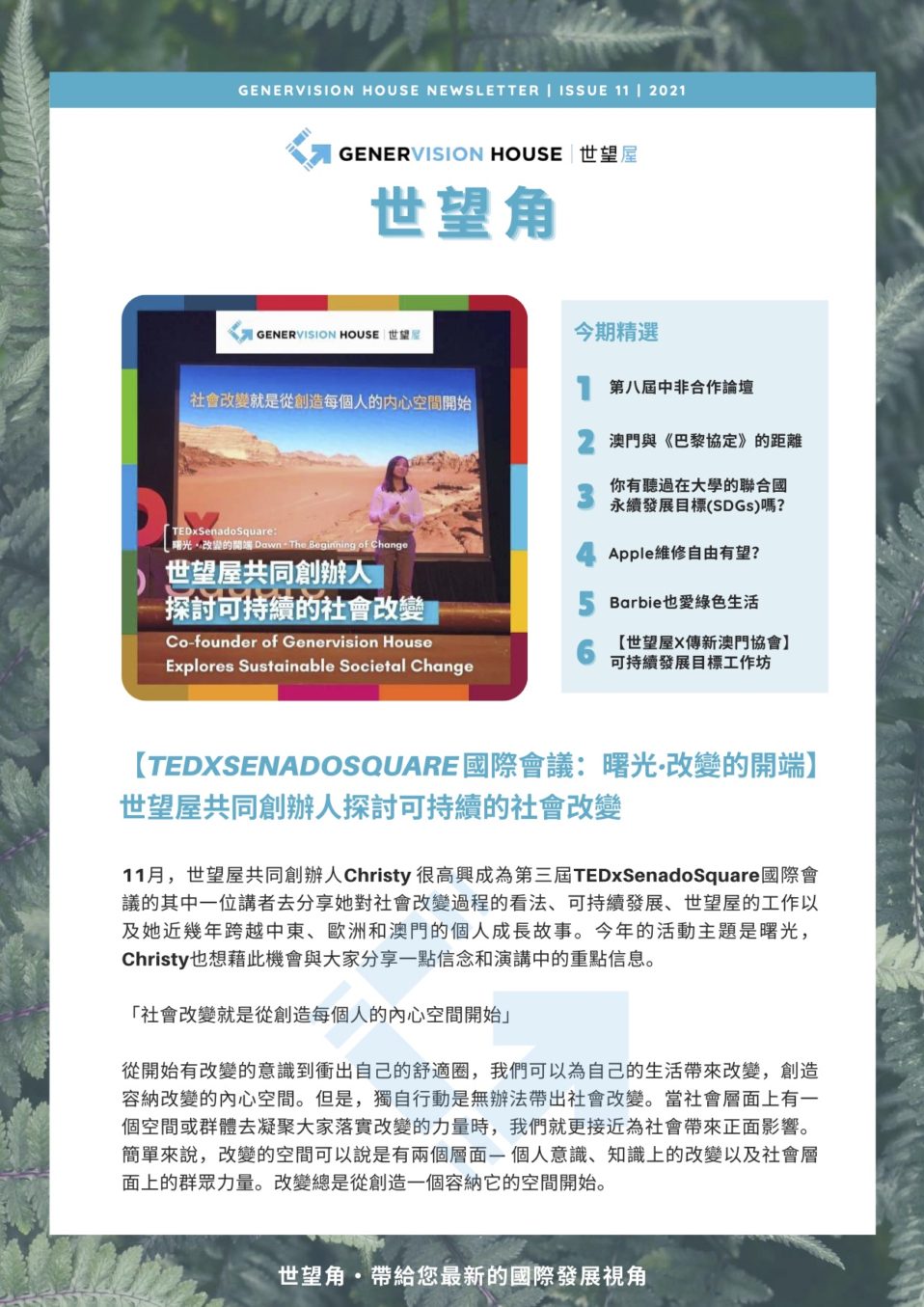
Un agrees, adding that they plan to raise awareness through offline activities, like workshops, and online content, such as monthly newsletters and videos. “We’ve also held experiential activities, like our Gutenberg Soap Series Workshop,” says Ng.
In collaboration with local artist Oriana Cheang, participants gathered at the Centro de Cultura e Artes Performativas Cardeal Newman in May to discuss sustainable consumption while carving pretty patterns on recycled soap collected from staycations and quarantines. They then used the patterned soap to stamp greeting cards made out of recycled paper.
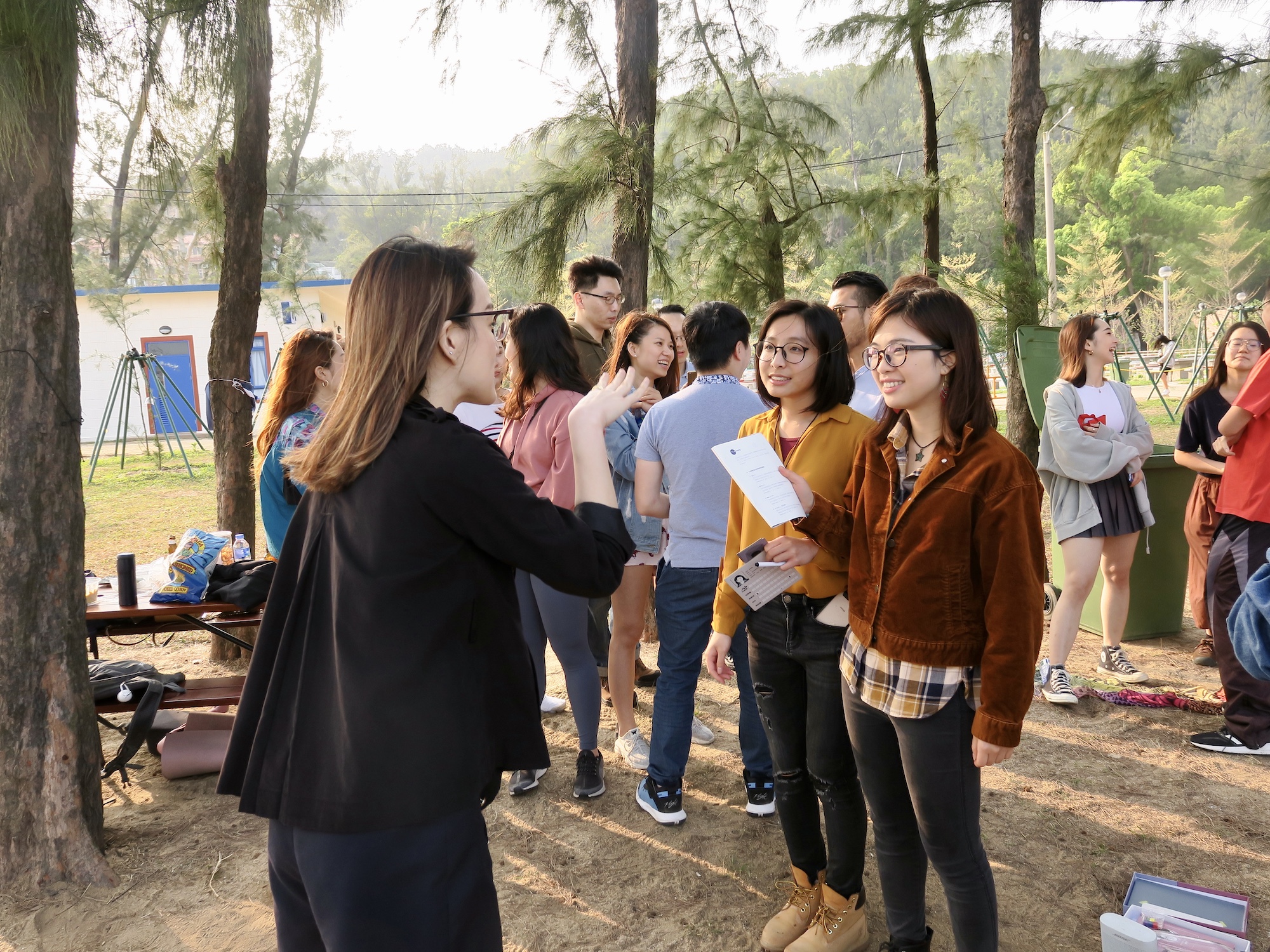
For International Women’s Day in March, Genervision House organised a potluck event in Hac Sa Beach with the Language Exchange & Culture Promotion Association to discuss gender equality – another SDG – over board games. Ng says they strive to host more events in the future and are currently planning another farming experience.
Genervision House hosted a beach potluck event with the Language Exchange & Culture Promotion Association in March 2021 to discuss gender equality
In addition to community events, the association hopes to collaborate with policymakers and present solutions to bring the SDGs to the forefront. While sustainable development has played a more central role in recent policy plans, the city has yet to integrate the SDGs into official roadmaps.
“Our vision is big, and it definitely will take time, but we are hopeful,” Un says. “We’re just beginning, but we’ve seen a lot more new faces and heard a lot more new voices who care about this topic… We can all adopt [the 17 SDGs] in our daily lives. It’s never too late to care about sustainable development.”
Want to contribute to sustainable development in Macao? Genervision House suggests five simple ways to practice the UN’s SDGs in your daily life:
1. Treat others the way you want to be treated. Lend a hand. Donate a book. Speak out against discrimination.
2. Reject, reduce, reuse, repair, recycle. If you have to buy something new, shop responsibly. Safeguard our environment and get involved in local development plans.
3. Support Fairtrade and minority-owned businesses. Mentor young people. Take a stand against workplace discrimination.
4. Read, converse, and exchange Ideas. Fostering peace through empathy and understanding. exchanges or reading.
5. Encourage your workplace to give back. Partner with charities. Encourage others to take action.